How to Vet a Factory: 15 Critical Questions to Ask a Clothing Manufacturer Before Hiring
Before you wire a deposit to any factory, ask these 15 questions. A manufacturer's answers reveal whether they are a competent production partner or a costly mistake waiting to happen.
Elron Garments Team · · 13 min read
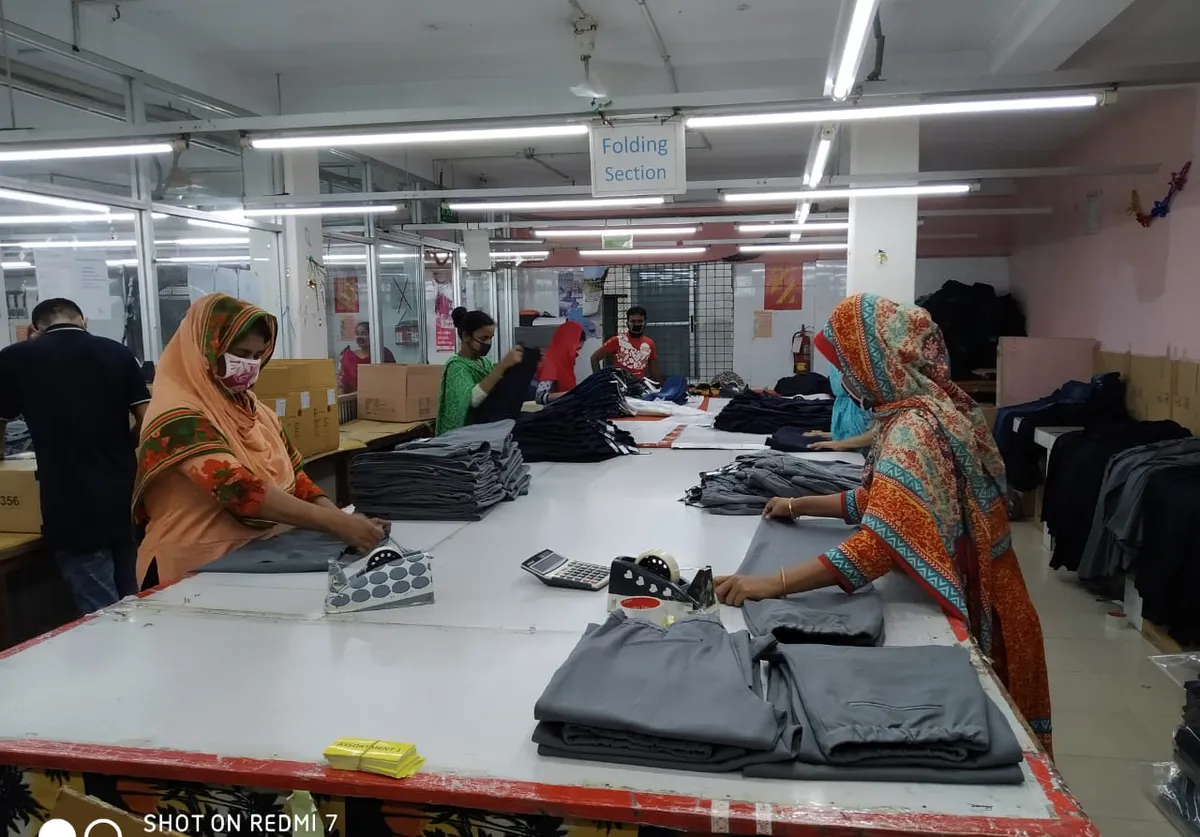
You are holding your phone, staring at an email from an overseas factory. They sent you pictures of a beautiful, clean sewing floor. They quoted you a fantastic price on your new heavyweight streetwear collection. They are asking you to wire a $15,000 deposit to begin bulk production.
Do you send it?
If you have not heavily vetted this facility, wiring that money is like walking into a casino and putting your entire brand on red.
Every single day, fashion founders lose their capital to incompetent suppliers, middlemen posing as factory owners, and facilities that bait-and-switch premium fabrics for cheap polyester blends. Once your money crosses international borders, your leverage is gone. You cannot fly across the world to argue about a crooked neck label or a zipper that jams. You have to engineer the risk out of the relationship before you sign the contract.
We have spent over a decade navigating the global apparel supply chain — from our own sewing floor in Dhaka. We know exactly how factory managers deflect blame, how they hide unauthorized subcontracting, and how they manipulate shipping terms to protect their own profit margins.
You do not need a friendly supplier; you need a competent one. This guide strips away the polite industry norms. Here are the exact questions to ask a clothing manufacturer before you hire them, what answers you should accept, and what answers should make you walk away immediately.
Phase 1: Understanding Their Business Model and Capacity
Before you discuss your specific garment, you must figure out who you are actually talking to. The internet is full of "manufacturers" who do not own a single sewing machine.
1. "Are you a direct factory or a trading company?"
Trading companies (or sourcing agents) build slick websites, rank highly on Google, and speak excellent English. They take your order, add a 20% to 30% markup, and farm the actual work out to a hidden factory.
- Green Flag Answer: "We are the direct factory. Here is our business registration matching our factory address, and we can jump on a live video call right now to show you the cutting tables and sewing floor."
- Red Flag Answer: "We partner with many premium facilities to get you the best price." (They are a middleman).
| Feature | Trading Company | Direct Factory |
|---|---|---|
| Communication | Usually excellent, native-level | Often requires patience and specific technical terms |
| Pricing | High (includes middleman markup) | Low (factory direct cost) |
| Product Variety | Infinite (they use dozens of factories) | Specific (they only make what their machines allow) |
| Quality Control | Hard to enforce | Directly accountable to your contract |
2. "Do you operate on an OEM, ODM, or CMT model?"
You must align their business model with your capital and experience level.
- OEM (Original Equipment Manufacturer): True custom clothing manufacturing. You provide the tech pack, they source the raw materials and build it from scratch.
- ODM (Original Design Manufacturer): They own existing blanks and patterns. You just add your tags and screen print. (Ideal for startups needing a low MOQ factory.)
- CMT (Cut, Make, Trim): They only provide labor. You must buy the fabric and ship it to them.
Factory Insight: Do not ask a CMT factory to source your fabric. They will ignore your email. If you want them to handle the heavy lifting, you must ask for Full-Package Production (FPP).
3. "What is your strict Minimum Order Quantity (MOQ) per style, color, and size?"
Factories lie about MOQs to get you on the phone. They advertise "50 pieces" on their profile, but when you send a complex tech pack requiring custom dye, the MOQ suddenly jumps to 500 pieces.
- Green Flag Answer: "For your custom Pantone dye requirement, our mill requires 150 kilograms of fabric, which equals about 300 t-shirts. However, if you use our stock black fabric, we can lower the MOQ to 100 pieces per style across four sizes."
- Red Flag Answer: "We can do any quantity you want." (Factories run on volume. A factory accepting a 20-piece custom cut-and-sew order is desperate, likely producing terrible quality, or preparing to overcharge you massively on samples.)
Phase 2: Tech Packs, Fabric, and Product Development
A factory quote is completely worthless without a technical blueprint. You use this phase to test their textile engineering knowledge.
4. "Do you review and work strictly from Tech Packs?"
A professional factory relies on technical documentation. If you send a hand-drawn sketch and they say, "Yes, we can make this, wire $500," run away.
- Green Flag Answer: "Please send your Tech Pack containing the Bill of Materials (BOM), Point of Measure (POM) grading matrix, and stitch callouts so our pattern maker can calculate accurate fabric yield."
- Red Flag Answer: "Just send a reference photo and we will copy it."
5. "How do you handle fabric sourcing and shrinkage testing?"
Fabric dictates 80% of your garment's quality. If you are ordering cotton garments, you must discuss shrinkage. Physics dictates that cotton shrinks when washed.
- Green Flag Answer: "We source through certified mills. We require the mill to mechanically compact the fabric before cutting. We then conduct a wash test on the proto-sample. Our acceptable shrinkage tolerance is under 5%."
- Red Flag Answer: "Our cotton does not shrink." (They are either lying, using cheap synthetic blends, or treating the fabric with harsh chemical resins.)
6. "What is your exact process and pricing for sample making?"
Never authorize bulk production without signing off on physical samples. Samples cost more than bulk units because stopping an industrial line to sew a single shirt is highly inefficient. The standard progression you want to hear:
- Proto Sample: Used to check the raw fit and grading. Often made with available stock fabric. (Usually $50–$150.)
- Pre-Production (PP) Sample: The final standard. Made with your exact bulk fabric, exact dye, and exact printing. (Usually $100–$300.)
Expert Advice: One of the most important questions to ask a clothing manufacturer is whether sample costs are credited back to the bulk invoice. A fair factory will deduct the $150 sample fee from your final bill if you proceed with a bulk order of 300+ units.
Phase 3: Pricing Structures and Hidden Costs
The price they quote you in the first email is almost never the final price you pay. You must force the factory to define their shipping and setup terms explicitly.
7. "Does your quote represent EXW, FOB, or DDP pricing?"
Incoterms define who pays for the shipping, insurance, and import duties. This is the difference between a profitable brand and a bankrupt one.
- EXW (Ex Works): The factory leaves the boxes on their own loading dock. You pay for trucks, ocean freight, export licenses, customs brokers, and import tariffs. (Avoid this unless you are a logistics expert.)
- FOB (Free on Board): The factory pays to load the goods onto a ship at their local port. You pay the ocean freight and your country's import duties.
- DDP (Delivered Duty Paid): The factory pays for absolutely everything. The price they quote is the final price to get the boxes sitting inside your warehouse. (This is the safest option for new brands.)
| Cost Component (Heavyweight Hoodie) | FOB Factory Quote | You Pay Separately |
|---|---|---|
| Cut & Sew Labor + Fabric | $14.00 | $0.00 |
| Ocean Freight to USA | $0.00 | $2.50 |
| US Import Tariffs (avg 16%) | $0.00 | $2.24 |
| Final Landed Cost | $14.00 (looks cheap) | $18.74 (the real cost) |
8. "What are your specific setup fees for printing and custom dyeing?"
Factories hide their margins in setup fees. If you want a 4-color graphic screen printed on your shirts, the factory must burn four separate mesh screens. Ask exactly what the per-screen setup cost is (usually $25 to $50). If you want a custom Pantone fabric color, ask what their lab dip fee is. A lab dip is a small 4x4 inch fabric swatch the factory dyes to prove they can match your hex code before dyeing the bulk rolls.
9. "What are your required payment terms?"
Never pay 100% upfront for bulk production. You instantly lose all leverage to force them to fix defective garments.
- Green Flag Answer: "We require 30% upfront to purchase the raw fabric and lock in line time. The remaining 70% is due only after you approve the final quality control inspection report before shipping." (Sometimes 50/50 is acceptable for smaller orders.)
- Red Flag Answer: "100% upfront via Western Union."
Phase 4: Quality Control and Dispute Resolution
The factory floor is chaotic. Needles break, operators get tired, and sewing machine tension slips. Mistakes will happen. You must establish how those mistakes are handled before they occur.
10. "Do you accept third-party AQL 2.5 inspections prior to final payment?"
This is a non-negotiable requirement. AQL stands for Acceptable Quality Limit. A third-party inspector (like QIMA or SGS) visits the factory, pulls a random sample of your sealed boxes, and measures the garments against your tech pack. An AQL 2.5 standard means if they find more than 2.5% major defects (holes, massive sizing errors, crooked prints), the entire batch fails.
- Green Flag Answer: "Yes, we welcome third-party inspectors. We will notify you three days before packing is complete so your inspector can schedule a visit."
- Red Flag Answer: "You do not need to hire an inspector. Our internal QC team is perfect. Trust us." (They are hiding high defect rates.)
11. "What is your specific policy for resolving major defects?"
If the inspector finds that 40 out of your 300 t-shirts have the neck label sewn on backward, who pays for the loss?
- Green Flag Answer: "If the goods fail inspection due to factory error, we will unpack the boxes, rework the defective units, and present the batch for re-inspection at our cost. If a unit cannot be fixed, we will issue a credit on your final 70% invoice."
12. "What is your realistic bulk lead time, and do you offer delay penalties?"
Factories want your deposit. They will tell you they can finish your order in 15 days just to secure the wire transfer. Custom apparel manufacturing takes time. Sourcing fabric takes 2 weeks. Sewing takes 3–4 weeks. Ask for a production calendar. For massive B2B orders, ask if they will sign a Late Delivery Penalty clause (e.g., deducting 1% of the invoice total for every week the order is late past the agreed-upon date).
Phase 5: Compliance, Ethics, and Scalability
Modern consumers and retail buyers demand supply chain transparency. If you buy from an unethical sweatshop, your brand carries the legal and public relations liability.
13. "Can you provide active, unexpired ethical and environmental certifications?"
Do not accept a simple "Yes." Ask for the actual certificate numbers so you can verify them on the issuing organization's public database.
- WRAP (Worldwide Responsible Accredited Production): Verifies the factory obeys local labor laws, pays fair wages, and ensures a safe working environment without child labor.
- OEKO-TEX Standard 100: Proves every component of your garment (fabric, thread, zippers) is free from toxic chemicals and heavy metals.
- GOTS (Global Organic Textile Standard): Required if you are utilizing organic cotton.
14. "Do you have the capacity to scale, and do you ever use unauthorized subcontractors?"
You place an order for 5,000 streetwear hoodies. The factory gets busy with a bigger client. Instead of telling you, they load your fabric into a truck and send it to an uncertified, unregulated shadow facility down the road to be sewn. You lose all quality control.
- What to say: "Our contract will explicitly state that unauthorized subcontracting is grounds for immediate cancellation of the order. All garments must be cut and sewn in the facility you showed us on video."
15. "Can you provide references from brands in my specific country?"
If you are a USA-based brand, ask the factory if they currently export to the US. A factory accustomed to European or Asian markets might use different baseline grading metrics. You want a factory that understands standard American sizing expectations and US Customs and Border Protection import documentation.
The Elron Standard
Vetting a factory requires you to act as an interrogator, a textile engineer, and a contract lawyer simultaneously. If a supplier dodges your questions about AQL standards, fabric yields, or WRAP certifications, you must walk away, regardless of how cheap their per-unit quote looks. You deserve a supply chain partner who answers these questions transparently before you even have to ask them.
Elron Garments is a 100% export-oriented garments manufacturer in Dhaka, Bangladesh, built on the exact principles detailed in this guide. We offer true OEM and ODM production for brands that refuse to compromise on quality or ethics.
We do not play games with hidden FOB pricing or bait-and-switch fabric sourcing. From the moment you submit your tech pack, you receive clear answers regarding fabric compacting, custom dye lot MOQs, and accurate lead times. We support low MOQ production from 50 pieces for growing streetwear brands and scale seamlessly for massive B2B bulk orders. Every garment is subject to strict AQL 2.5 quality control on our own, fully compliant sewing floors — and with DDP shipping, we manage the worldwide logistics so you can focus entirely on scaling your brand.
Stop gambling your capital on unverified suppliers. Build your supply chain with a factory that actually acts like a partner.
Ready to produce your line?
Low 50-piece MOQ, samples in 7–15 days, DDP to 38+ countries. Send your specs — we reply within 24 hours.
Get a QuoteFrequently Asked Questions
What are the most important questions to ask a clothing manufacturer?
The most critical questions involve their business model (direct factory vs trading company), their exact Minimum Order Quantity (MOQ) per color/style, their payment terms (never pay 100% upfront), and their willingness to accept a third-party AQL 2.5 quality inspection before you send the final payment.
How do I know if a clothing manufacturer is legit?
You verify a factory's legitimacy by requesting a live video tour of their sewing floor, cross-referencing their business registration documents, checking the validity of their WRAP or ISO compliance certificates on public databases, and ordering a physical custom sample before committing to bulk production.
What is the difference between OEM and ODM manufacturing?
OEM (Original Equipment Manufacturer) involves creating a completely custom garment from scratch based on your specific tech pack and grading matrix. ODM (Original Design Manufacturer) involves taking a factory's existing, pre-designed blank garment and simply applying your custom labels, prints, and colors.
How much should a clothing sample cost?
A basic pre-production sample usually costs between $50 and $150, while complex outerwear or heavily customized streetwear samples can cost $200 to $400. Factories charge a premium (often 2x to 5x the bulk unit price) because halting a mass-production line to sew one single garment is highly inefficient.
What is a good MOQ for a startup clothing brand?
For a startup, an ideal MOQ is between 50 and 150 pieces per style. While factories will charge a slightly higher per-unit rate for this volume, it prevents you from tying up all your capital in unproven inventory and mitigates the risk of accumulating dead stock.
What does FOB mean in apparel manufacturing?
FOB stands for Free on Board. It is a pricing quote that covers the cost of raw materials, labor, and the transportation required to get the finished goods onto a shipping vessel at the factory's local port. It does not include ocean freight or the import duties required to get the goods to your warehouse.
What is a tech pack and why do factories need it?
A tech pack is the ultimate instruction manual for your garment. It includes flat vector sketches, exact point-of-measure (POM) sizing matrices, fabric requirements, hardware details, and sewing construction methods. Factories need it to accurately calculate fabric yield, labor time, and an exact unit price.
Why do cotton shirts shrink after washing?
Cotton fibers naturally constrict when exposed to water and heat. A high-quality clothing manufacturer prevents excessive shrinkage by mechanically compacting (pre-shrinking) the fabric rolls before cutting the patterns. Acceptable shrinkage for a standard 100% cotton t-shirt is typically 3% to 5%.
What is AQL in garment quality control?
AQL stands for Acceptable Quality Limit. It is an internationally recognized statistical inspection standard. An inspector pulls a random sample of your finished bulk order. If the number of major defects (like holes or incorrect sizing) exceeds a set threshold (usually 2.5%), the buyer has the right to reject the entire batch.
How do you negotiate payment terms with a clothing factory?
Never accept a demand for 100% upfront payment. The industry standard is 30% upfront to cover raw materials, and the remaining 70% paid only after you receive and approve a passed third-party AQL inspection report. This structure keeps the factory financially motivated to fix defects.
How do I find a good clothing manufacturer?
You find a reliable supplier by utilizing vetted B2B directories like Maker's Row or Sewport, attending major industry trade shows like MAGIC or Texworld, and intensely vetting potential partners using a strict checklist of operational and compliance questions before sharing your tech packs.
What is Cut, Make, Trim (CMT) manufacturing?
CMT is a labor-only manufacturing agreement. You, the brand owner, are responsible for sourcing and purchasing the fabric, zippers, threads, and tags, and shipping them to the factory. The factory solely provides the labor to cut the fabric and sew the garments together.
Do clothing manufacturers put my tags on the clothes?
Yes. Private label manufacturing expressly involves custom relabeling. You provide the design, and the factory will sew your custom woven neck labels into the collar, attach your branded hangtags, and apply legally required care labels to the inside side seams.
How long does it take to manufacture clothing?
Once you approve the final pre-production sample, standard custom bulk manufacturing typically takes 6 to 10 weeks depending on the factory's capacity. If you factor in the initial tech pack review, custom fabric sourcing, and ocean freight shipping, the entire process takes roughly 3 to 4 months.
Is it better to manufacture clothing in the USA or overseas?
Domestic USA manufacturing offers much faster shipping times, easier communication, and lower MOQs, but per-unit labor costs are significantly higher. Overseas manufacturing offers cheap per-unit costs and massive capacity, but requires navigating language barriers, complex import logistics, and long ocean transit times.
What happens if a clothing factory steals my design?
To protect your intellectual property, require the factory to sign a Non-Disclosure, Non-Use, and Non-Circumvention (NNN) agreement before you send them technical files. Additionally, working with well-reviewed, ethically certified factories significantly lowers the risk of IP theft compared to anonymous brokers.
Can a factory source custom fabric for me?
Yes, if they operate under a Full-Package Production (FPP) model. These factories have established relationships with textile mills and can source specific weights (GSM), specialized blends, and arrange custom Pantone lab dips to match your brand's exact color requirements.
What is OEKO-TEX certification?
OEKO-TEX Standard 100 is an independent global safety testing certification. If a factory holds this certificate for a garment, it guarantees that every single component — from the cotton and synthetic threads to the dyes and metal zippers — is completely free from toxic, harmful chemicals.
How much does it cost to start a clothing line?
Starting a viable clothing line with custom-manufactured physical inventory typically requires between $3,000 and $15,000. This covers the costs of company formation, tech pack creation, multiple sampling rounds, your initial bulk inventory deposit (MOQ), and building your ecommerce infrastructure.
What is the best fabric weight for streetwear clothing?
Streetwear apparel relies heavily on structure, durability, and a boxy drape. The ideal fabric is 100% combed cotton in a heavyweight classification, typically ranging from 220 GSM to 280 GSM for t-shirts, and 350 GSM to 450+ GSM for hoodies and sweatpants.