
Nearshore Clothing Manufacturer vs. Asian Suppliers: The 2026 Sourcing Guide
Deciding between a nearshore clothing manufacturer and Asian suppliers? An honest comparison of costs, lead times, MOQs, risk and compliance — written by an Asian factory that will tell you when nearshore wins.
Elron Garments Team · · 12 min read
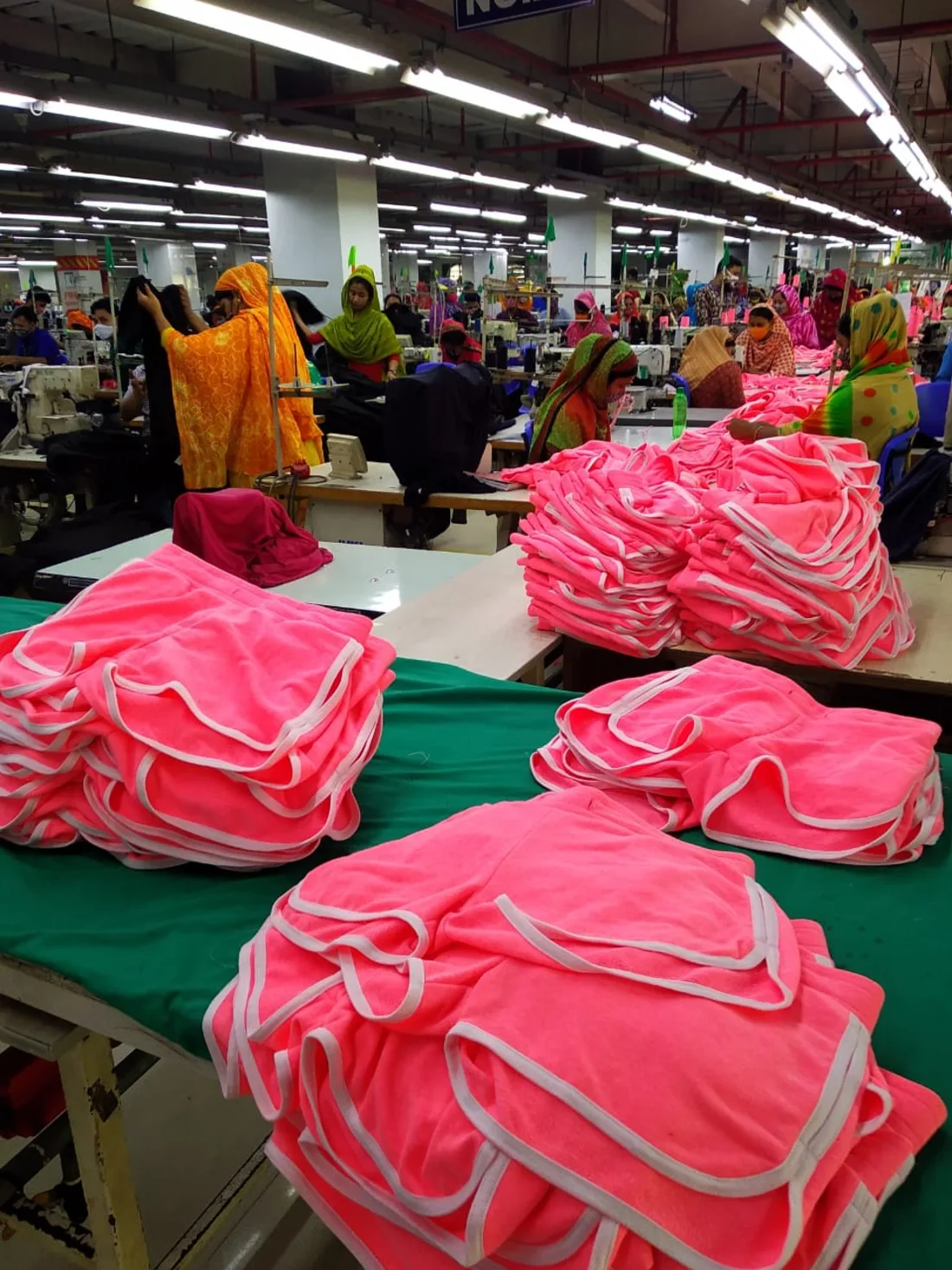
For forty years the blueprint for a profitable fashion brand was simple: design in the West, manufacture in Asia. China, Bangladesh and Vietnam became the heavyweights of global apparel production on the strength of labour rates and economies of scale.
In 2026 that consensus is under real pressure. Freight volatility, tightening environmental regulation, geopolitical friction and consumer demand for faster trend cycles have pushed brands to reconsider. Enter the nearshore clothing manufacturer — production moved close to the consumer market, trading Asia's cost advantage for speed and resilience.
We are a Bangladeshi factory, so treat what follows accordingly — but an honest comparison serves you better than a sales pitch, and there are categories where nearshoring genuinely wins.
Defining the Two Models
Offshore: the Asian supplier
The traditional model — brands in North America or Europe contracting factories in Asia. Key hubs are China, Bangladesh, Vietnam, India and Cambodia. The appeal is deep infrastructure, vertical integration where fabric mills and sewing sit in the same region, and low labour cost.
Nearshore
Production in a country geographically close to your primary market, sharing similar time zones and connected by land or short sea routes. For North American brands that means Mexico, El Salvador, Guatemala, Honduras and Canada; for European brands, Turkey, Portugal, Morocco and Eastern Europe. The appeal is speed to market, lower freight, cultural proximity and reduced geopolitical exposure.
Six Pillars, Head to Head
Pillar 1 — Lead times
Ocean freight from Asia takes 30 to 45 days. Add a standard 60-day production cycle and total lead time reaches 3 to 4 months. A factory in Mexico can truck goods to a Texas distribution centre in 48 to 72 hours, compressing total lead time to 4 to 6 weeks.
Winner: nearshore. If your model depends on reacting to trends, this is not close.
Pillar 2 — Cost
Do not compare factory invoices. Compare landed cost — the total to get the garment into your warehouse.
| Cost factor | Asian suppliers | Nearshore manufacturer |
|---|---|---|
| Labour | Very low | Moderate to high |
| Fabric sourcing | Low — materials are local | Higher — fabric often imported |
| Freight | High — ocean or air | Low — trucking or short sea |
| Duties and tariffs | Higher, varies by origin and category | Low or zero under agreements such as USMCA |
| Overall landed cost | Usually lower, especially on basics | Higher, though the gap is narrowing |
Winner: Asian suppliers. For high-volume basics — tees, standard denim, fleece — scale economics still deliver the better margin.
Pillar 3 — Minimum order quantities
Large Asian facilities are built for scale and typically demand 1,000 to 5,000+ units per style and colour, which locks up cash in inventory. Nearshore facilities are often structured for smaller runs, and 300 to 500 units per style is far easier to arrange.
Winner: nearshore — with one caveat worth naming. The MOQ gap is a function of factory size, not geography. Smaller Asian factories, including ours, run 50 to 300-piece programmes; you simply will not find them among the mega-suppliers that dominate directory listings.
Pillar 4 — Supply chain resilience
Sourcing from Asia carries real 2026 exposure: port strikes, canal disruptions, container shortages and geopolitical tension can stall a business overnight. Nearshoring across a land border sidesteps maritime bottlenecks almost entirely.
Winner: nearshore. Logistical stability is the main reason enterprise brands are shifting volume.
Pillar 5 — Communication and oversight
A 12 to 15-hour time difference means a factory-floor problem costs you a full day just waiting on a reply, and a site visit is a week-long trip. A nearshore partner works in or near your time zone, and a factory visit is a short flight.
Winner: nearshore on structural convenience. In practice, responsiveness varies more by partner than by geography — a factory that answers within hours and sends daily production photos closes most of this gap.
Pillar 6 — Sustainability and compliance
Regulations like the EU Digital Product Passport and the U.S. UFLPA demand supply chain transparency. Distance makes auditing harder and ocean freight adds meaningfully to Scope 3 emissions. Shorter chains are easier to monitor.
Winner: nearshore on transport emissions and audit logistics. On documentation itself, the deciding factor is whether your factory holds current OEKO-TEX, GOTS, BSCI, SEDEX or WRAP certification and can produce the paperwork — which is a property of the factory, not the continent.
China Plus One: The Strategy Most Brands Actually Adopt
The successful enterprise brands in 2026 are not abandoning Asia. They are running a hybrid model:
- Core basics stay in Asia. Evergreen items — plain hoodies, basic denim, blank tees — are ordered in volume where landed cost is lowest and margin is highest.
- Trend pieces go nearshore. Seasonal and viral product is produced in smaller batches closer to market. The unit cost is higher, but capturing the trend at full retail price beats discounting late inventory.
Splitting the chain gives you Asia's economics on the predictable half of your range and nearshoring's speed as insurance on the volatile half.
If You Are Moving Production Nearshore
Step 1: Understand the fabric limitation
This is the biggest practical hurdle. Countries like Mexico are strong at cut, make and trim but lack the mill infrastructure of Asia. You may end up sourcing fabric from Asia, shipping it to Mexico, and sewing there — which erodes both the lead-time and emissions advantages. Confirm your nearshore partner's fabric network before signing anything.
Step 2: Use the trade agreements
The financial case for nearshoring depends on avoiding tariffs. In North America, understand USMCA: under the yarn-forward rule, garments qualify for duty-free entry only if the yarn and fabric originate within the region — which brings you straight back to step one.
Step 3: Pilot before you migrate
Do not move everything at once. Run one capsule collection or a single category through a nearshore partner and compare landed cost, defect rate and actual delivered lead time against your historical Asian data.
Diversification beats loyalty. The brands that struggled most in the last disruption were the ones with a single point of failure — wherever it happened to be.
Which Should You Choose?
There is no universal answer. Choose based on which constraint actually binds your business:
- Choose Asian suppliers if you produce meaningful volume, your range is not highly trend-sensitive, you need specific or proprietary fabrics, and cost per unit is your primary lever.
- Choose nearshore if speed is your competitive advantage, you want to avoid deadstock through smaller runs, and you value real-time collaboration over unit economics.
Elron Garments is a 100% export-oriented apparel manufacturer in Dhaka, Bangladesh — an Asian supplier, on the side of this comparison that wins on landed cost and loses on transit time. What we do about the usual objections: MOQs from 50 pieces per style rather than 1,000, replies within 24 hours rather than a day lost to time zones, and DDP shipping so the landed cost we quote is the number you actually pay.
If you are building a hybrid supply chain, that is the role we are built for. Send us your tech pack and we will come back within 24 hours with factory-direct pricing, fabric options and an honest timeline — including where nearshoring would genuinely serve you better.
Ready to produce your line?
Low 50-piece MOQ, samples in 7–15 days, DDP to 38+ countries. Send your specs — we reply within 24 hours.
Get a QuoteFrequently Asked Questions
What is nearshore clothing manufacturing?
Nearshoring means producing in a country geographically close to your primary consumer market — Mexico, El Salvador, Guatemala or Honduras for US brands; Turkey, Portugal, Morocco or Eastern Europe for European brands — connected by land or short sea routes and sharing similar time zones.
Is nearshore manufacturing cheaper than Asia?
Generally no, on landed cost. Nearshore wins on freight and duties but loses on labour and fabric sourcing, since fabric often has to be imported. For high-volume basics, Asian production still delivers the lower landed cost, though the gap has narrowed.
How much faster is nearshore production?
Substantially. Asian sourcing typically runs 3 to 4 months total — a 60-day production cycle plus 30 to 45 days ocean freight. A Mexican factory can truck to a Texas distribution centre in 48 to 72 hours, bringing total lead time to roughly 4 to 6 weeks.
What MOQs do nearshore factories require?
Nearshore facilities commonly accept 300 to 500 units per style, against 1,000 to 5,000+ at large Asian volume factories. Note that this reflects factory size rather than geography — smaller Asian factories also run 50 to 300-piece programmes.
What is the China Plus One strategy?
A hybrid model where evergreen basics stay in Asia to maximise margin on predictable volume, while seasonal and trend-driven pieces are produced nearshore in smaller batches to capture demand at full retail price. It hedges the supply chain instead of betting entirely on one region.
What is the biggest problem with nearshoring apparel?
Fabric infrastructure. Countries like Mexico excel at cut, make and trim but lack Asia's mill base, so fabric is often imported from Asia and shipped in — which erodes both the lead-time and carbon advantages that justified nearshoring.
What is the USMCA yarn-forward rule?
Under USMCA, garments enter the United States duty-free only if the yarn and fabric originate within the USMCA region. Importing Asian fabric for sewing in Mexico can therefore forfeit the tariff advantage that makes nearshoring financially viable.
Does nearshoring reduce carbon emissions?
It reduces transport emissions, which cut Scope 3 figures, and shorter chains are easier to audit. If the fabric is still shipped from Asia to the nearshore factory, however, much of that transport saving is offset.
How should I test a nearshore manufacturer before switching?
Run a pilot. Move one capsule collection or a single product category and compare the final landed cost, defect rate and actual delivered lead time against your historical data from the incumbent factory before shifting any further volume.
When do Asian suppliers still make more sense?
When you produce meaningful volume, your range is not highly trend-sensitive, you need specific or proprietary fabrics available in the region, or cost per unit is the lever your business model depends on most.