
Full Service vs CMT Clothing Manufacturer: Which Model Will Save Your Brand?
A $9 CMT labor quote can end up costing more than a $28 full-service unit. Here is the exact math, logistics, and risk breakdown behind the two manufacturing models — and how to pick the right one for your brand.
Elron Garments Team · · 14 min read
You are holding two quotes for your brand's upcoming streetwear collection. The first quote comes from a Full Service factory. It reads $28.00 per unit, fully finished, bagged, and ready to ship. The second quote comes from a local Cut, Make, Trim (CMT) facility. It reads $9.00 per unit.
You think you just found a massive shortcut. You assume that by choosing the CMT factory, you will save $19.00 per garment and double your profit margins overnight.
Then reality hits. You realize the $9.00 CMT quote only covers the labor of cutting the fabric and sewing the seams. You still have to buy forty rolls of heavy fleece from a textile mill, ship them to the factory, purchase thousands of zippers, buy thread, source woven labels, and pay for shipping and import duties.
Two months later, the fabric arrives late, the thread color doesn't match the zippers, and your $9.00 "bargain" ended up costing you $31.00 per unit — plus fifty hours of logistical nightmare.
The Full Service vs CMT decision is the most critical supply chain fork in the road for any fashion brand. Pick the wrong model for your current operational capacity, and you will either drown in supply chain management or bleed out your profit margins to a factory middleman.
We have spent years managing apparel production lines and balancing factory balance sheets. The truth about these two models is rarely discussed clearly online. It comes down to who assumes the risk, who holds the cash flow, and who manages the friction between the raw materials and the sewing needle.
Defining the Models: Full Service (FPP) vs CMT
Before you send a single tech pack to a supplier, you must understand who does the heavy lifting under each manufacturing arrangement.
Full Service Production (FPP / Full Package)
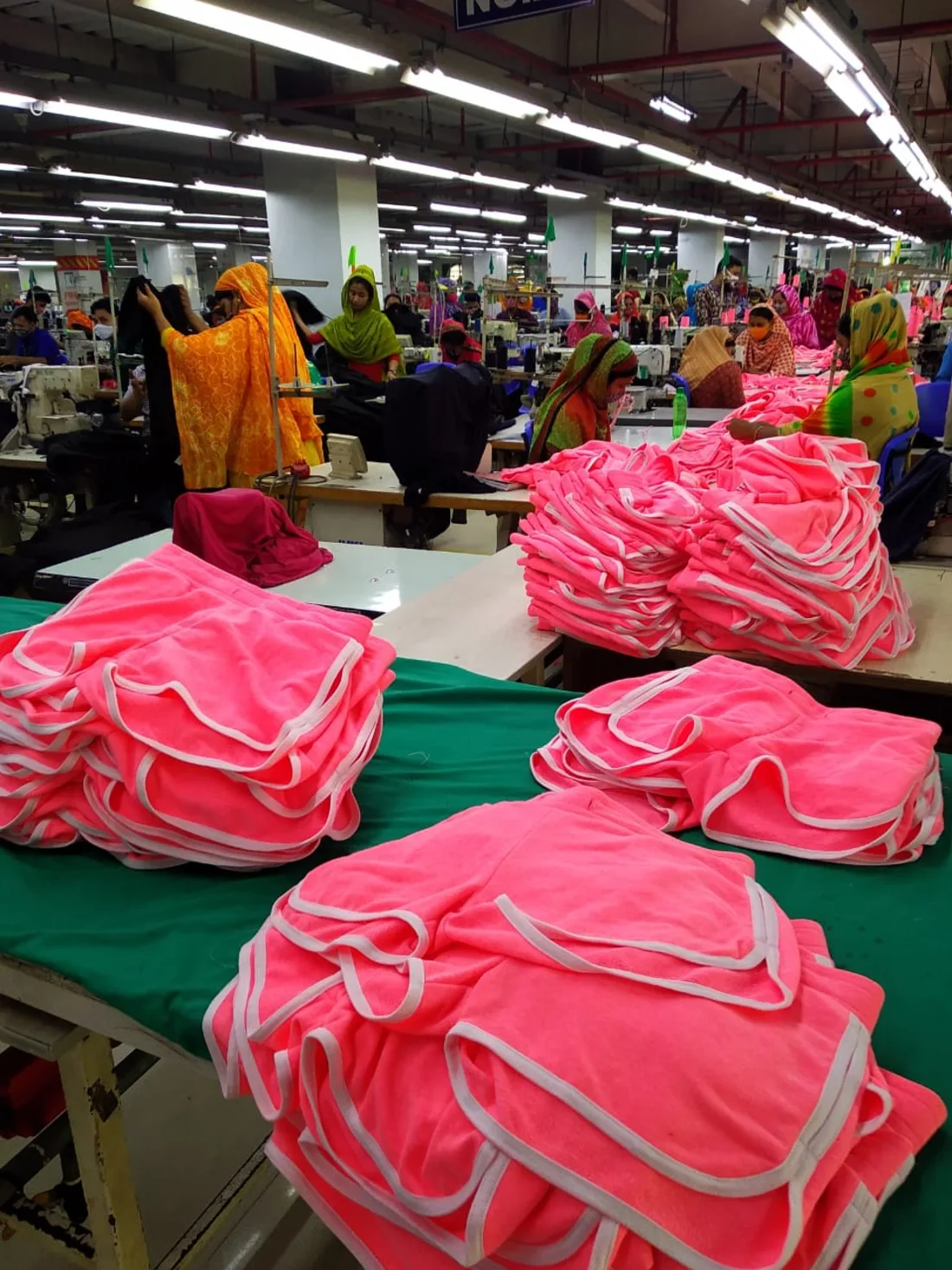
Full Service — often called Full Package Production (FPP) or OEM — is a turnkey solution. You provide the design, the tech pack, and the target specifications. The factory takes over from there.
They source the raw fabric from their trusted textile mills, buy the thread, source the zippers, engineer the paper patterns, cut the material, execute the sewing, handle the screen printing or embroidery, inspect the quality, and package the final garment into polybags.
- The Business Dynamic: The factory acts as a central project manager. They buy the materials in bulk using their own credit lines and charge you a single, all-inclusive unit price (FOB or DDP).
- The Main Benefit: Low operational friction. You focus entirely on marketing, design, and sales while the factory manages the complex supply chain.
Cut, Make, Trim (CMT)
CMT is a pure labor contract. The factory provides the physical space, the sewing machines, and the manual labor. You — the brand owner — act as the supply chain manager.
You must purchase the rolls of fabric from a textile mill and arrange for them to be delivered to the factory's loading dock. You must buy the thread, the care labels, the neck tags, the drawstrings, and the metal aglets. The factory simply cuts the fabric panels using your pattern, sews the pieces together, and trims the loose threads.
- The Business Dynamic: The factory sells machine time and labor hours. They do not care where the fabric comes from or what it costs. They simply charge a fee for the labor of converting your raw materials into finished garments.
- The Main Benefit: Total control over material costs and fabric quality. You bypass the factory's markup on raw materials.
The Financial Reality: Unpacking the Hidden Costs
The biggest mistake new brand founders make is comparing a Full Service invoice directly to a CMT invoice. They are completely different financial animals.
The Full Service Markup
When a Full Service factory quotes you $28.00 per unit, they are not taking a massive profit margin. They are factoring in:
- The raw cost of the fabric and trims.
- A 10% to 20% material handling fee (to cover the risk of fabric flaws, shipping delays, and upfront cash outlay).
- Pattern development and grading fees.
- Actual cut-and-sew labor.
- Quality control and packaging expenses.
You pay a premium for convenience and risk transfer. If the fabric mill ships defective cloth to a Full Service factory, it is the factory's problem to solve or replace.
The CMT Cost Trap
When a CMT factory quotes you $9.00 for labor, that is just the baseline. You must calculate the True Accumulated Unit Cost by factoring in the individual line items you must buy yourself. Here is a real-world scenario for a custom 350 GSM heavyweight hoodie:
| Cost Item | Full Service (FPP) | CMT Model (Self-Sourced) |
|---|---|---|
| Factory Labor Quote | Included in total | $9.00 |
| Fabric (2.2 yards @ $7/yd) | Included in total | $15.40 |
| Ribbing & Trim Material | Included in total | $2.20 |
| YKK Metal Zipper | Included in total | $2.50 |
| Custom Woven Labels & Hangtags | Included in total | $0.60 |
| Inbound Freight (Fabric to Factory) | Included in total | $1.80 |
| Leftover Fabric Scrap Loss (15%) | Included in total | $2.31 |
| Total Price Per Unit | $28.00 | $33.81 |
In this scenario, managing the sourcing yourself actually cost more per unit than hiring a Full Service factory. Why? Because a Full Service factory buys fabric in 10,000-yard quantities, securing wholesale pricing you cannot match as a small brand buying 200 yards.
Operational Workflows: Who Handles What?
Understanding who bears the burden of daily execution makes it easy to choose between these two paths.
Full Service Workflow Responsibilities
- Brand: Submits a detailed Tech Pack, approves pre-production samples, and pays the agreed-upon deposit.
- Factory: Coordinates textile mills, manages dye lab dips, purchases hardware, creates master patterns, executes grading, manages line mechanics, cuts, sews, performs AQL quality control, packages, and prepares customs export documentation.
CMT Workflow Responsibilities
- Brand: Submits the Tech Pack and paper patterns. Sources and purchases raw fabric rolls. Calculates exact fabric yield to ensure enough material arrives. Sources matching threads, zippers, drawstrings, labels, and polybags. Arranges freight logistics to deliver all raw materials to the factory floor simultaneously.
- Factory: Inspects incoming raw materials for obvious damage, cuts the fabric according to the provided pattern, sews the garments, trims loose threads, and packs them into the boxes provided by the brand.
Factory Insight: If you choose CMT, you must master the concept of Fabric Yield. If your pattern requires 1.8 yards of fabric per shirt, you cannot just buy 180 yards for a 100-shirt order. You must factor in a 10% to 15% cutting loss (waste between pattern pieces) and potential fabric flaws. If you underbuy fabric, the factory will stop your production run midway through, and your order will sit unfinished.
Sourcing and Quality Control Discrepancies
Quality control takes on a completely different meaning depending on which model you choose.
Quality Control in Full Service
In a Full Service arrangement, the factory owns the quality of the raw materials. If the fabric pilling rate is too high, or if the dye bleeds in the wash, the factory is responsible.
You protect your brand by setting strict quality criteria in your contract, such as requiring an AQL 2.5 (Acceptable Quality Limit) inspection prior to final payment. If the finished goods fail the inspection due to fabric or construction flaws, the Full Service factory must remake or fix the batch at their own expense.
Quality Control in CMT
In a CMT arrangement, the factory only guarantees their sewing craftsmanship. They do not guarantee the performance of the fabric or hardware you supplied.
If the zippers you purchased directly from an overseas supplier jam continuously, the CMT factory will still sew them into the jackets. When you complain that the zippers are defective, the factory manager will rightly point out: "You supplied the zippers. We just sewed them in. Pay us for our labor."
If the fabric you bought shrinks 10% because the textile mill forgot to compact it, that is your loss. The CMT factory cut the fabric you provided. You bear 100% of the raw material liability.
Minimum Order Quantities (MOQs) and Line Efficiency
MOQ expectations vary dramatically between these two models due to industrial physics.
Why Full Service Has Higher MOQs
Full Service factories usually enforce higher Minimum Order Quantities (typically 300 to 500+ pieces per style). Their minimums are dictated by their suppliers. The dye houses they work with require a minimum fabric volume (usually 100 to 150 kg) to run an industrial dye vat. If a Full Service factory agrees to make 50 shirts for you, they lose money buying small yardages of fabric at retail markup.
Why CMT Offers Lower MOQs
CMT factories often accept much smaller production runs (sometimes as low as 50 to 100 pieces). Since they are not buying the fabric or tying up their capital in raw materials, they only care about occupying their sewing machine operators. If you drop off three rolls of fabric and a box of zippers at their door, they can set up a small line and sew your 50 units quickly. You pay a higher per-hour labor rate for small runs, but you can get custom garments made in smaller batches.
Lead Times and Supply Chain Risk Exposure
Time to market is often the deciding factor for fast-growing brands.
Lead Times in Full Service
Full Service production typically takes 8 to 14 weeks. The timeline is longer upfront because the factory must source custom fabric, run dye lab dips for color approval, and wait for bulk fabric milling before cutting can begin. However, the timeline is predictable. A single project manager oversees every step of the process.
Lead Times in CMT
CMT lead times can be fast or painfully slow — it depends entirely on your organizational skills.
If all your raw materials arrive at the factory floor on time, a CMT factory can cut and sew a batch in 2 to 3 weeks. However, if your fabric arrives on Monday, but your custom neck labels are delayed in customs until next Friday, the factory will pull your order off their line and assign the machinery to another client. Your raw fabric will sit in a corner of their warehouse for weeks until another opening on the sewing line appears.
Full Service vs CMT: The Ultimate Decision Matrix
| Operational Feature | Full Service (FPP) | Cut, Make, Trim (CMT) |
|---|---|---|
| Primary Benefit | Turnkey convenience; low operational risk | Absolute fabric control; lower factory labor rate |
| Material Management | Handled 100% by the factory | Handled 100% by the brand founder |
| Upfront Capital | High per-unit deposit; all-inclusive | Fragmented (paid separately to multiple vendors) |
| Sourcing Knowledge | Minimal technical knowledge required | Advanced (yield math, trim specs, thread counts) |
| Defective Material Risk | Assumed by the factory | Assumed 100% by the brand owner |
| Typical MOQs | High (300 to 500+ pcs per style) | Low (50 to 100+ pcs per style) |
| Best Suited For | Startups, scaling brands, corporate buyers | Apparel veterans, brands with proprietary fabric |
How to Choose Based on Your Brand Profile
Choose Full Service (FPP) If:
- You are a startup founder, D2C brand owner, or corporate buyer without years of supply chain experience.
- You do not have established relationships with textile mills, dye houses, and trim suppliers.
- You want a single invoice and a guaranteed landed cost per unit.
- You want the factory to take legal and financial responsibility for fabric performance and construction quality.
Choose Cut, Make, Trim (CMT) If:
- You are an experienced fashion designer or sourcing director who knows how to calculate fabric yield and thread specs.
- You have spent months developing a custom, proprietary fabric with a textile mill and only need an operator to sew it.
- You have the time and bandwidth to manage five different suppliers (fabric mill, trim supplier, zipper manufacturer, label printer, and sewing factory) simultaneously.
- You operate near a garment district and can physically visit the CMT floor weekly to manage the incoming materials.
The Elron Standard
Managing the complex friction of an apparel supply chain — whether sourcing raw textiles or managing line mechanics — requires dedicated operational infrastructure. Most brand founders want to spend their time building their brand, creating designs, and driving sales, not arguing with freight brokers over a delayed box of woven labels.
You deserve a partner who makes manufacturing seamless.
Elron Garments is a 100% export-oriented apparel manufacturer in Dhaka, Bangladesh, offering full-package OEM/ODM solutions and specialized private label manufacturing. We eliminate the chaos detailed in this guide.
We handle technical sourcing, maintain relationships with certified textile mills, execute precision cut-and-sew operations, and enforce strict AQL quality control standards. Whether you need low MOQ private label production from 50 pieces or full-scale custom bulk manufacturing, we manage the technical heavy lifting — including DDP shipping to your door — so you can focus entirely on scaling your business.
Ready to produce your line?
Low 50-piece MOQ, samples in 7–15 days, DDP to 38+ countries. Send your specs — we reply within 24 hours.
Get a QuoteFrequently Asked Questions
What is the difference between a Full Service and a CMT clothing manufacturer?
A Full Service (FPP) clothing manufacturer manages the entire production supply chain, handling raw fabric sourcing, pattern making, sewing, embellishments, and final packaging for an all-inclusive per-unit price. A CMT (Cut, Make, Trim) manufacturer only provides the labor to cut the fabric and sew the garments, requiring the brand owner to source and deliver all raw textiles, threads, zippers, and labels to the factory floor.
What does CMT stand for in clothing manufacturing?
CMT stands for Cut, Make, and Trim. It is a manufacturing service model where the factory strictly cuts the fabric, sews (makes) the garment, and trims the loose threads, using raw materials provided entirely by the client.
Is CMT cheaper than Full Package Production (FPP)?
On paper, the factory quote for CMT labor looks much cheaper. However, when you add the costs of purchasing small-batch fabric rolls, shipping raw materials to the factory, purchasing trims, and factoring in fabric waste, CMT often ends up costing the same or more per unit than Full Service production for small to mid-sized brands.
What is Full Package Production (FPP)?
Full Package Production (FPP), also known as Full Service or OEM manufacturing, is a turnkey service where the factory handles every stage of production — from sourcing raw textiles and creating technical patterns to cutting, sewing, quality control, and final packaging.
Why do factories prefer Full Service over CMT?
Full Service allows factories to control the quality and timing of raw materials, ensuring their production lines run without delays. It also allows them to leverage their bulk purchasing power with textile mills to earn a margin on material handling.
Can I provide my own fabric to a Full Service manufacturer?
Generally, no. Full Service manufacturers prefer to source textiles through their verified mill network to guarantee fabric performance and quality. If you want to supply your own fabric, you should look for a Cut, Make, Trim (CMT) factory.
What happens if fabric runs out during a CMT production run?
If you miscalculate your fabric yield and run out of material during a CMT run, the factory will stop production immediately. Your order will sit incomplete on the floor while you order, dye, and ship additional fabric rolls to the factory, usually resulting in heavy downtime fees.
Which model is better for a startup clothing brand?
Full Service (FPP) is significantly better for most startups. It eliminates the logistical complexity of managing multiple raw material vendors and protects the brand from expensive mistakes in fabric yield and trim selection.
How do I calculate fabric yield for CMT production?
Fabric yield is calculated by laying out the garment pattern pieces across the width of the fabric roll (usually 58 to 60 inches) to see how many linear yards are needed per garment, then adding a 10% to 15% buffer for cutting waste and fabric flaws.
What is an AQL inspection in garment manufacturing?
AQL stands for Acceptable Quality Limit. It is a standardized statistical inspection method used by buyers to evaluate a random sample of finished garments before shipment to ensure defect rates stay below a specified threshold (typically AQL 2.5).
Do CMT factories handle screen printing and embroidery?
Some CMT factories have in-house screen printing or embroidery machines, but many do not. In a traditional CMT arrangement, if embellishments are needed, you may have to arrange for the cut fabric panels to be shipped to a secondary printing facility before returning to the CMT floor for sewing.
How much does CMT manufacturing cost?
CMT labor costs vary based on garment complexity and location. Basic cut-and-sew labor for a simple t-shirt can range from $2.00 to $5.00 overseas, or $6.00 to $12.00 domestically in the USA. Complex outerwear or tailored garments can cost $20.00 to $50.00+ in labor alone.
What is the difference between OEM and CMT?
OEM (Original Equipment Manufacturer) is equivalent to Full Package Production, where the factory builds a custom product from raw material sourcing to final finishing based on your tech pack. CMT is strictly the labor component of cut and sew, excluding raw material sourcing.
Why is fabric yield important in apparel manufacturing?
Fabric yield dictates how much raw textile is required to make a single garment. Accurately calculating yield prevents costly fabric shortages during production and ensures you do not waste money buying excess material that ends up as dead stock.
How do I find a Cut, Make, Trim factory?
You can find CMT factories by searching regional apparel directories (like Maker's Row or CFDA in the USA), attending trade shows like MAGIC or Texworld, or exploring garment manufacturing hubs in cities like Los Angeles, New York, or London.
What is a tech pack in the garment industry?
A tech pack (technical packet) is an instruction manual for manufacturing a garment. It includes flat vector sketches, exact points of measure (POM), a Bill of Materials (BOM), stitch specifications, and label placement guidelines required for production.
What is BOM in apparel manufacturing?
BOM stands for Bill of Materials. It is a comprehensive list included in a tech pack that details every raw material required to construct a garment, including body fabric, lining, thread type, buttons, zippers, neck tags, and packaging.
Is it better to manufacture clothing domestically or overseas?
Domestic manufacturing offers faster shipping times, easier communication, and lower minimum order quantities, but carries significantly higher labor costs. Overseas manufacturing offers lower per-unit production costs and massive capacity, but involves longer lead times and ocean shipping logistics.
How do you protect your designs when working with a factory?
Require factories to sign a Non-Disclosure, Non-Use, and Non-Circumvention (NNN) agreement before sharing your tech packs. Additionally, register your brand's trademarks and work with certified, reputable manufacturers.
What does FOB price mean in clothing manufacturing?
FOB stands for Free on Board. It is a factory pricing quote that includes the complete cost of raw materials, labor, and domestic transport to get the boxed garments onto a cargo ship at the origin port. It does not include international freight or import duties.