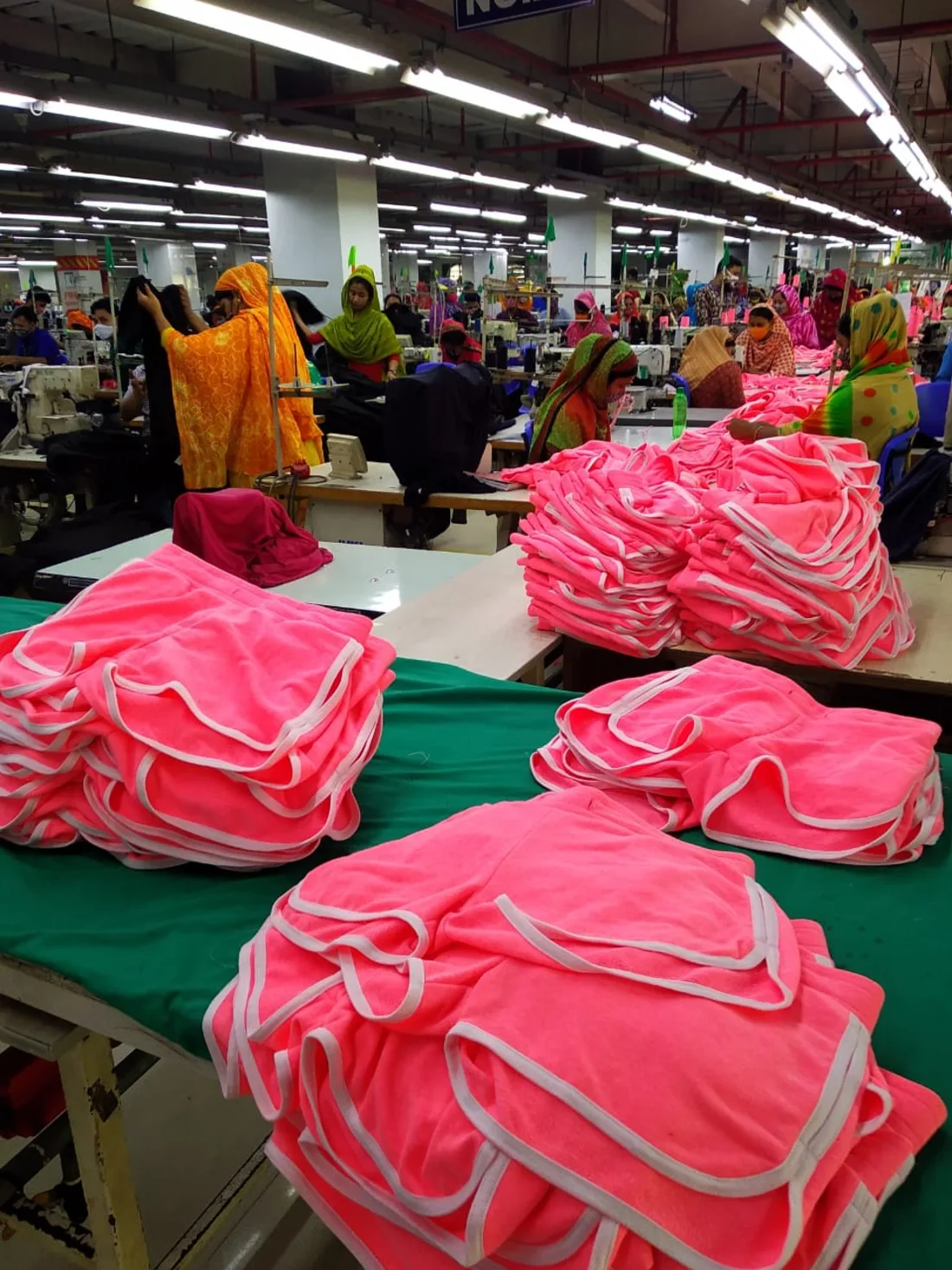

How to Find a Reliable USA Clothing Manufacturer Now
Domestic production promises faster shipping and a Made-in-USA label — but finding a reliable American factory is brutal if you don't know where to look. Here is the exact blueprint, from directories and trade shows to outreach emails and red flags.
Elron Garments Team · · 15 min read
You are staring at a sample that took six weeks to arrive. The measurements are two inches off, the neckband looks like bacon, and the custom dye job you requested resembles muddy water. You email the factory rep. Crickets.
That sinking feeling is the exact moment most fashion brand founders decide they want to bring their production closer to home.
Building a clothing line on American soil sounds incredibly appealing. You get faster shipping, easier communication, and the prestige of a "Made in USA" label. The reality? Finding a reliable USA clothing manufacturer is a brutal process if you do not know where to look or how to speak the industry's language.
We have spent years navigating garment factories on both sides of the ocean. We have seen startups burn through fifty thousand dollars of venture capital because they partnered with a domestic factory that subcontracted their work to a shadow facility in a different state. The apparel industry is notoriously opaque. Factory owners are busy managing floor operators, fixing broken sewing machines, and fighting supply chain delays. They rarely have the time to hold a new designer's hand.
This guide strips away the industry secrecy: how domestic clothing production operates right now, where to locate the best facilities, how to structure your emails so factory managers actually reply, and how to protect your capital from the first sample to the final delivery.
Understanding Domestic Production Models
Before you start hunting for an American apparel factory, you must know what you actually need. Domestic factories operate under strict business models. If you ask a CMT factory to source your fabric, they will delete your email. Understand these three acronyms before you make contact.
Full-Package Production (FPP)
Full-package means the factory handles everything. You hand them a tech pack and a design file. They buy the fabric, source the zippers, grade the patterns, cut the material, sew the garments, print the graphics, and bag the final product. For startup clothing brands, FPP is the safest route. You pay a higher premium per unit, but you eliminate the nightmare of coordinating raw materials yourself.
Cut, Make, Trim (CMT)
CMT factories only provide the labor. You are responsible for buying the fabric from a textile mill. You must purchase your own neck labels, threads, buttons, and zippers. You ship all of these raw materials directly to the factory floor. The factory simply cuts the fabric, makes the garment, and trims the loose threads.
CMT is significantly cheaper on a per-unit basis. It gives you ultimate control over your fabric quality. It also requires you to act as a full-time logistics manager. If the fabric mill is late, your factory slot gets canceled, and you lose money.
Blanks and Private Label (ODM)
Original Design Manufacturing (ODM) involves buying pre-made blank garments that a factory already produces. You pick a heavy 240 GSM boxy t-shirt from their catalog. They remove their tag, sew your tag into the neckline, and screen print your artwork on the chest.
Expert Advice: If you have less than $10,000 in capital, do not attempt custom cut-and-sew (FPP or CMT). Find a high-quality blank manufacturer and utilize their private label program. You will bypass the pattern-making fees, lower your MOQs, and get to market three months faster.
| Feature | Full-Package (FPP) | Cut, Make, Trim (CMT) | Private Label (ODM) |
|---|---|---|---|
| Control Over Fabric | High (factory sources to spec) | Absolute (you buy it directly) | Low (must use existing options) |
| Logistics Burden | Low | Extremely high | Very low |
| Capital Required | High | Medium | Low |
| Development Speed | 8 to 12 weeks | 6 to 10 weeks | 2 to 4 weeks |
| Ideal Brand Profile | Funded startups, established labels | Experienced apparel veterans | Streetwear startups, merch lines |
The Financial Reality: USA vs Overseas Manufacturing
Let us have a frank conversation about money. Brands search for a USA clothing manufacturer expecting domestic production to cost just a few dollars more than Asian factories. You need to reset your expectations immediately.
Breaking Down the Cost Floor
An overseas factory might charge you $5.00 to manufacture a premium heavyweight tee. A domestic factory in Los Angeles or New York will charge you between $25.00 and $45.00 for a comparable heavyweight hoodie. Why the massive gap?
- Labor Wages: American garment workers earn minimum wage or piece-rate wages that strictly adhere to federal and state labor laws.
- Overhead: Commercial real estate in major domestic garment hubs (Los Angeles, New York City) is astronomically expensive.
- Compliance: Domestic factories pay heavy insurance premiums, OSHA compliance costs, and environmental disposal fees for dye runoff.
The Hidden Savings of Domestic Production
While the per-unit cost is undeniably higher, manufacturing in the USA eliminates several massive hidden expenses.
- Freight and Logistics: Shipping a full container of clothing from Asia to a US port takes 30 to 45 days and costs thousands of dollars. Domestic freight takes four days via a standard trucking route.
- Import Duties: The United States imposes hefty tariffs on imported textiles. Depending on the fabric composition, import taxes can add 15% to 32% to your total invoice. Domestic production carries zero import duties.
- Inventory Agility: Many overseas factories require high MOQs (usually 500+ pieces) to justify the shipping logistics. A domestic factory can often run a small batch of 100 units. You tie up less cash in inventory that might not sell.
When to choose USA production: your retail price point supports the margin (e.g., selling a t-shirt for $45+, not $20); your brand identity relies heavily on "Made in USA" marketing; you require fast turnaround times to react to viral trends; and you have the capital to invest in premium craftsmanship.
Where to Find a USA Clothing Manufacturer
Google is a terrible place to find a garment factory. The best manufacturers do not care about SEO. Their websites often look like they were built in 2005, featuring broken links and pixelated images. The factories with the flashiest websites are often just middlemen or sourcing agents marking up the costs. To find real factories, you must use industry-specific directories.
Maker's Row
Maker's Row is the undisputed heavyweight platform for domestic sourcing. It connects brands with thousands of vetted American manufacturers, covering everything from cut-and-sew facilities to sample makers and fabric mills.
- Pros: Highly visual interface. You can filter by state, product category, and minimum order quantities. It is heavily utilized by startups and boasts over 200,000 brand users.
- Cons: It operates on a paid subscription model for brands.
CFDA Production Directory
The Council of Fashion Designers of America (CFDA) maintains an open-access directory of over 380 U.S. fashion manufacturers. This is an incredibly valuable, free resource.
- Pros: Completely free to use. Categorizes factories by location (heavily indexing New York and Los Angeles), price points, and production minimums ranging from 1–10 samples up to 500+ bulk orders.
- Cons: Less hand-holding. You simply get the contact information and must handle the vetting and outreach yourself.
Sewport
While Sewport is a global platform, it features a robust filter specifically for USA clothing manufacturers.
- Pros: Operates as a secure platform where you can build your tech pack directly within their system, communicate with factories, and process payments securely.
- Cons: You must sift through international factories to isolate the domestic ones, and some listings act as agents rather than direct factory owners.
Factory Insight: Do not just blast generic emails to fifty factories on a directory. Find five that specifically match your product category. If you want to make denim jeans, do not contact a factory that specializes in stretch activewear. The machinery required for heavy denim (like heavy-duty chain stitch machines) is completely different than what is used for spandex.
Networking at Apparel Trade Shows
Directories are excellent, but the garment industry still relies heavily on handshakes. Walking the floor at an apparel trade show allows you to feel the fabric, inspect the stitching quality of a factory's floor samples, and negotiate face-to-face.
SOURCING by Informa & MAGIC (Las Vegas)
Held every February and August in Las Vegas, MAGIC is the cornerstone of North American fashion sourcing. The dedicated SOURCING pavilion connects you directly with manufacturers, fabric mills, and supply chain experts. The Play: Look specifically for the "Made in USA" sections. Bring physical copies of your tech packs. You can often secure a verbal agreement on MOQs and pricing right on the convention floor.
Texworld New York City & Los Angeles
Texworld runs major sourcing events in both New York (July and January) and Los Angeles. While it leans heavily into global fabric sourcing, the adjoining Apparel Sourcing pavilions feature dozens of domestic production partners. The Play: This is the best place to execute a CMT strategy. You can find a domestic fabric mill, buy your yardage, and then walk three aisles over to secure a domestic cut-and-sew partner.
Regional and Specialty Shows
Do not ignore smaller, highly focused shows. If you are launching a streetwear line involving complex print techniques, attend the Impressions Expo. If you focus on sustainable or technical fabrics, events like the Advanced Textiles Expo are vital.
Quick Tip for Trade Shows: Dress like you belong in the industry. Factory owners size you up in three seconds. If you look disorganized, they will quote you a "go away" price. Have a digital business card ready, know your fabric weights, and state your target volume immediately.
The Anatomy of a Perfect Tech Pack
A tech pack is the single most common point of failure for new brands. You cannot send a factory an email saying, "I want a heavyweight oversized black hoodie, how much?" That is like asking a homebuilder, "I want a large gray house, how much?"
A Tech Pack (Technical Packet) is the architectural blueprint of your garment. A professional manufacturer will use this document to determine their machine setup time, fabric consumption, and labor costs. The non-negotiable elements:
- Technical Flat Sketches: Black and white vector drawings showing the front, back, and inside of the garment. Call out every seam, topstitch, and hem type.
- Point of Measure (POM) Guidelines: A visual guide showing exactly where measurements are taken.
- Grading Matrix: The exact dimensions for your sample size (usually Medium), and the mathematical grade rules scaling up to XXL and down to XS.
- Bill of Materials (BOM): A literal shopping list — body fabric (e.g., 100% Combed Cotton, 240 GSM, Reactive Dye), ribbing (95% Cotton / 5% Elastane, 1x1 rib, matched to body color), thread (100% polyester core spun, dyed to match).
- Label and Embellishment Placement: Exact measurements detailing where the neck tag sits, and the precise chest coordinates for your screen print.
Did You Know? A missing tolerance spec in a tech pack can ruin a production run. Tolerance is the acceptable margin of error. If your chest measurement is 22 inches, a standard tolerance is +/- 0.5 inches. If you do not specify this, you cannot legally force the factory to remake a batch that came out half an inch too small.
Building Your Factory Outreach Strategy
You have your funding. You have your tech pack. You found a factory on a directory. Now you must send the first email.
Factory managers receive dozens of inquiries a week from "visionary entrepreneurs" who have no money and no idea how manufacturing works. Your goal in the first email is to prove you are a professional buyer. A winning outreach email includes:
- A specific subject line: "Production Inquiry: [Your Brand] x [Product Category] — Tech Pack Attached."
- Who you are: your name, your brand, and your niche in one sentence — no life story.
- The project scope: the exact product, target initial volume (e.g., 300 units across 3 colorways), target delivery month, and the services you need (pattern grading, fabric sourcing, cut, sew, printing).
- Three direct questions: Does this product fit your current capabilities? What is your standard MOQ for these specifications? What is your estimated lead time for an initial fit sample?
This works because it is entirely devoid of emotional fluff. You did not talk about your grand vision or how your brand will change the world. You gave them hard data. You established your timeline, volume, and exact technical requirements. This email gets replies.
Red Flags: Spotting Bad Factories Early
Not every domestic factory is a good factory. The "Made in USA" tag does not magically shield you from incompetence, delays, or shady business practices. When evaluating a potential partner, watch out for these critical warning signs.
The Subcontracting Secret
This happens constantly in major hubs. A slick, modern "factory" takes your order, charges you a premium, and then immediately subcontracts the actual sewing to a dilapidated, unregulated facility down the street. You lose all quality control. How to spot it: Ask for a live video tour of the cutting tables and sewing floor. If they make excuses or tell you insurance prohibits video calls, they are likely a middleman.
Communication Dead Zones
Garment manufacturing requires obsessive communication. If it takes the factory manager five days to reply to your initial inquiry, imagine how long it will take them to tell you the fabric mill ruined the dye batch. The Rule: A professional factory should reply within 24 to 48 hours. If they are unresponsive before you pay a deposit, they will be invisible after they have your money.
Resistance to AQL Standards
Quality control is objective, not subjective. The industry uses the Acceptable Quality Limit (AQL) to determine how many defective units are allowed before a bulk order is rejected. How to test them: Ask the factory, "Do you support third-party AQL 2.5 inspections prior to final payment?" If they become defensive or claim "our internal QC is perfect, you don't need that," walk away immediately.
The Sampling Phase: Protecting Your Investment
You never, under any circumstances, wire money for a bulk production run without approving physical samples first. Sampling is a multi-step process designed to catch catastrophic errors before they happen at scale.
The First Fit Sample
The factory cuts and sews one garment based on your tech pack. They will likely use available fabric that closely matches your weight requirements, rather than custom-dyeing a single yard. Your Job: Put it on a fit model. Check the drape. Measure the sleeve length. Does the collar lay flat? This is your chance to tweak the grading matrix. Do not complain about the fabric color here; the goal is assessing the silhouette and the construction.
Understanding Fabric Shrinkage
Consumers wash their clothes aggressively. If you are manufacturing 100% cotton garments, you must discuss shrinkage with your factory. A reliable manufacturer will utilize a process called compacting (or pre-shrinking) on the fabric rolls before cutting the pattern. Acceptable shrinkage is 3% to 5%. If your fit sample shrinks a full size after one wash, the factory is skipping steps to save money.
The Pre-Production (PP) Approval
Once the fit is dialed in, you request the Pre-Production sample. This garment must be constructed using the exact bulk fabric, the exact custom dye color, the exact thread tension, and the final screen prints or embroidery.
You must sign a physical approval tag attached to this sample. The factory keeps one approved PP sample, and you keep one. This is your insurance policy. If the bulk run looks different than the PP sample, the factory is legally obligated to fix it.
Quality Control and Compliance
Quality does not happen by accident. It is engineered through rigorous, tedious inspection. Even in premium factories, humans operate the sewing machines, and humans make mistakes.
Implementing AQL 2.5
The industry standard for premium fashion brands is AQL 2.5 for major defects. If you order 1,000 t-shirts, an inspector will pull a random statistical sample (e.g., 80 shirts) from the sealed boxes.
- Critical Defects (0% allowed): A needle left inside the garment. Sharp edges.
- Major Defects (2.5% allowed): Sizing out of tolerance. Holes in the fabric. Crooked screen prints. Broken zippers.
- Minor Defects (4.0% allowed): Untrimmed threads inside the garment. Slight dust marks that wash out.
If the inspector finds more than three major defects in that random pull of 80 shirts, the entire 1,000-unit batch fails. The factory must unpack every box, inspect every shirt manually, remove the defective ones, and present the batch for a re-inspection at their own cost.
Understanding Labor Certifications
Corporate apparel buyers and modern retailers care deeply about supply chain ethics. Premium factories voluntarily undergo intense auditing to prove their compliance. Look for factories that mention:
- WRAP (Worldwide Responsible Accredited Production): Ensures safe working conditions, fair wages, and strictly prohibits forced labor.
- OEKO-TEX Standard 100: Tests the raw textiles to guarantee the dyes and finishing chemicals used in your clothing are safe for human contact.
- ISO 9001: Proves the factory has a formalized, rigorous quality management system in place.
The Elron Standard
Finding a partner who understands tech pack engineering, fabric compacting, and AQL standards is rare — at any price point, in any country. Most factories expect the brand owner to manage the friction and take the losses when things go wrong.
You deserve better. And if the domestic math does not work for your margins, there is a middle path: an export-oriented factory that operates on the exact standards described in this guide, at offshore pricing.
Elron Garments is a 100% export-oriented apparel manufacturer in Dhaka, Bangladesh, offering true OEM, ODM, and private label solutions designed for brands that refuse to compromise on quality. We provide custom manufacturing for demanding streetwear labels, low MOQ production from 50 pieces for growing fashion brands, and seamless product development for corporate buyers.
Every single garment that leaves our floor is subjected to strict AQL 2.5 quality control. We handle the heavy technical lifting, secure premium raw materials, and manage DDP shipping to 35+ countries — including the USA — allowing you to focus completely on scaling your brand.
Ready to produce your line?
Low 50-piece MOQ, samples in 7–15 days, DDP to 38+ countries. Send your specs — we reply within 24 hours.
Get a QuoteFrequently Asked Questions
What is the best way to find a USA clothing manufacturer?
The most effective way is to use verified domestic sourcing directories like Maker's Row or the CFDA Production Directory. Alternatively, attend major industry trade shows like MAGIC Las Vegas or Texworld New York. Before contacting any factory, prepare a detailed tech pack to secure accurate pricing and prove your brand is ready for professional production.
How much does it cost to manufacture clothing in the USA?
Domestic manufacturing typically costs 3 to 5 times more per unit than overseas production. A premium blank t-shirt might cost $12 to $18 to cut and sew domestically, whereas it would cost $4 to $6 in Asia. However, you save on international freight and import tariffs.
What is a standard MOQ for USA clothing manufacturers?
For custom cut-and-sew (FPP), most domestic factories require a Minimum Order Quantity (MOQ) of 300 to 500 pieces per style. For private label or blank printing, MOQs can be as low as 50 to 100 pieces.
How do I verify a clothing manufacturer is actually based in the USA?
Request a live video tour of their facility during operating hours. Additionally, check their listing on vetted platforms like Maker's Row or the CFDA Production Directory, and cross-reference their business registration with the local state's Secretary of State database.
Can a domestic factory source custom fabric for me?
Yes, if they offer Full-Package Production (FPP). These factories have established relationships with domestic textile mills and can source specific weights, blends, and arrange custom lab dips for your brand colors.
What is the difference between CMT and FPP manufacturing?
CMT (Cut, Make, Trim) requires the brand owner to purchase and deliver all raw materials (fabric, zippers, labels) to the factory. FPP (Full-Package Production) means the factory handles the entire supply chain, from sourcing raw materials to final packaging.
Do USA manufacturers provide clothing samples before bulk production?
Absolutely. A reliable factory will never begin bulk production without your written approval on a physical Pre-Production (PP) sample. Expect to pay 2 to 3 times the bulk unit price for a single sample.
How long does domestic apparel production take?
Once you approve the final sample, standard bulk production in the USA takes 6 to 10 weeks depending on the factory's current capacity. Sourcing custom fabric can add an additional 3 to 4 weeks to this timeline.
What should I do if a factory ruins my bulk order?
If you utilized a third-party AQL 2.5 inspection before finalizing your payment, you have leverage. You can reject the shipment and demand the factory rework the defective units or issue a credit. Never pay 100% upfront; always hold 30% to 50% back until the inspection passes.
Is it better to manufacture in Los Angeles or New York?
Los Angeles is heavily optimized for casual wear, premium knits, streetwear, and denim. New York boasts incredible talent for high fashion, tailored garments, womenswear, and intricate sample making. Choose the hub that matches your product category.
Do I need a patent to protect my clothing designs?
Utility patents are rarely granted for standard clothing designs. To protect your brand, require the factory to sign a Non-Disclosure, Non-Use, and Non-Circumvention (NNN) agreement before sharing your tech packs, and register your brand's trademarks.
How do I start a clothing brand with no money?
Starting with zero capital requires using a Print-on-Demand (POD) model. You design the graphics, and a third-party facility prints and ships the garments directly to the customer only after a sale is made. Profit margins are low, but there is zero upfront inventory risk.
Is making clothes in the USA profitable?
Yes, provided your retail pricing strategy supports the higher cost of goods sold (COGS). Brands that successfully manufacture in the USA typically position themselves in the premium, luxury, or heritage markets, selling garments at a 4x to 6x markup over production costs.
Where do luxury brands manufacture their clothes?
While many legacy luxury brands manufacture in Italy and France, a significant portion of modern luxury streetwear is manufactured in Los Angeles, Portugal, and Japan, owing to their specialized expertise in heavy cotton knits and denim processing.
What is a tech pack for clothing?
A tech pack is the ultimate instruction manual for your garment. It includes flat technical sketches, exact point-of-measure sizing matrices, fabric requirements, hardware details, and sewing construction methods required for a factory to produce the item accurately.
Why are clothing samples so expensive?
Creating a single sample disrupts the flow of a mass-production factory. It requires a pattern maker to isolate a design, a sewer to calibrate machines for one garment, and custom fabric sourcing in incredibly small, inefficient quantities.
What does cut and sew mean in fashion?
Cut and sew is the literal process of taking raw rolls of fabric, cutting them into specific anatomical panels using a custom pattern, and sewing them together. It allows a brand to dictate the exact drape and fit of a garment, rather than settling for an off-the-shelf blank.
Can a clothing manufacturer help me design my clothes?
Some Full-Package factories have in-house product developers and fashion designers who can translate your rough sketches into technical production files, though they charge hourly development fees for this service.
How do I negotiate MOQs with clothing manufacturers?
To negotiate lower Minimum Order Quantities, offer to use the exact same fabric and color across multiple different styles (e.g., a hoodie and sweatpants utilizing the same heavy fleece). This allows the factory to meet their raw material minimums while giving you product variety.
Do clothing factories sign NDAs?
Yes, reputable manufacturers are accustomed to signing Non-Disclosure Agreements (NDAs). However, the most effective protection is an NNN agreement, which prevents the factory from sharing, using, or bypassing you to sell your specific designs.