
How to Find a Legitimate Eco-Friendly Clothing Manufacturer for Your Brand
Thousands of factories claim to be sustainable. Most are greenwashing. Here is how organic fabrics, low-impact dyes, and wastewater treatment actually work on the factory floor — and the certifications you must verify before you sign.
Elron Garments Team · · 15 min read
You finally receive the prototype for your brand's new sustainable collection. You marketed this launch to your audience as a triumph of ethical sourcing. You open the box. The shirt looks decent, but it carries a sharp, chemical odor that burns the back of your throat. You check the neck tag, and it proudly declares "100% Organic Cotton."
You just became a victim of greenwashing.
Selling sustainable clothing is highly profitable right now. Because of that profit margin, thousands of factories claim they operate ethically. They buy a few rolls of cheap, uncertified cotton, run it through a dye house utilizing heavy metals, pack it in single-use plastics, and sell it to you at a premium.
Building a brand rooted in environmental responsibility requires total supply chain transparency. If you do not understand how fabrics are milled, how dyes bond to fibers, and how factory wastewater is managed, you are gambling your brand's reputation on a supplier's marketing brochure.
We have spent years managing factory floors, negotiating with organic textile mills, and navigating the reality of sustainable clothing production. Getting a garment from a raw, pesticide-free seed to a retail-ready polybag is incredibly difficult. This guide strips away the marketing noise: how sustainable manufacturing works on the actual sewing floor, what certifications to demand, and how to vet an eco-friendly clothing manufacturer so you can confidently stand behind every garment you sell.
The Greenwashing Trap: Factory Floor Realities
The fashion industry has a massive trust problem. Brands want to advertise a low carbon footprint. Factories want to secure the production contract. The result is a supply chain full of half-truths.
What "Sustainable" Actually Means to a Factory
When you contact an ethical garment factory, you need to speak their language. Do not ask them if they are "green." Ask them for hard data. Sustainable apparel manufacturing operates on three distinct pillars:
- Raw Materials: Are the fibers grown without synthetic pesticides, or created from post-consumer waste?
- Chemical Management: Does the facility utilize low-impact dyes and process their own wastewater?
- Labor Ethics: Are the sewing machine operators paid a legal living wage and working in a safe, ventilated environment?
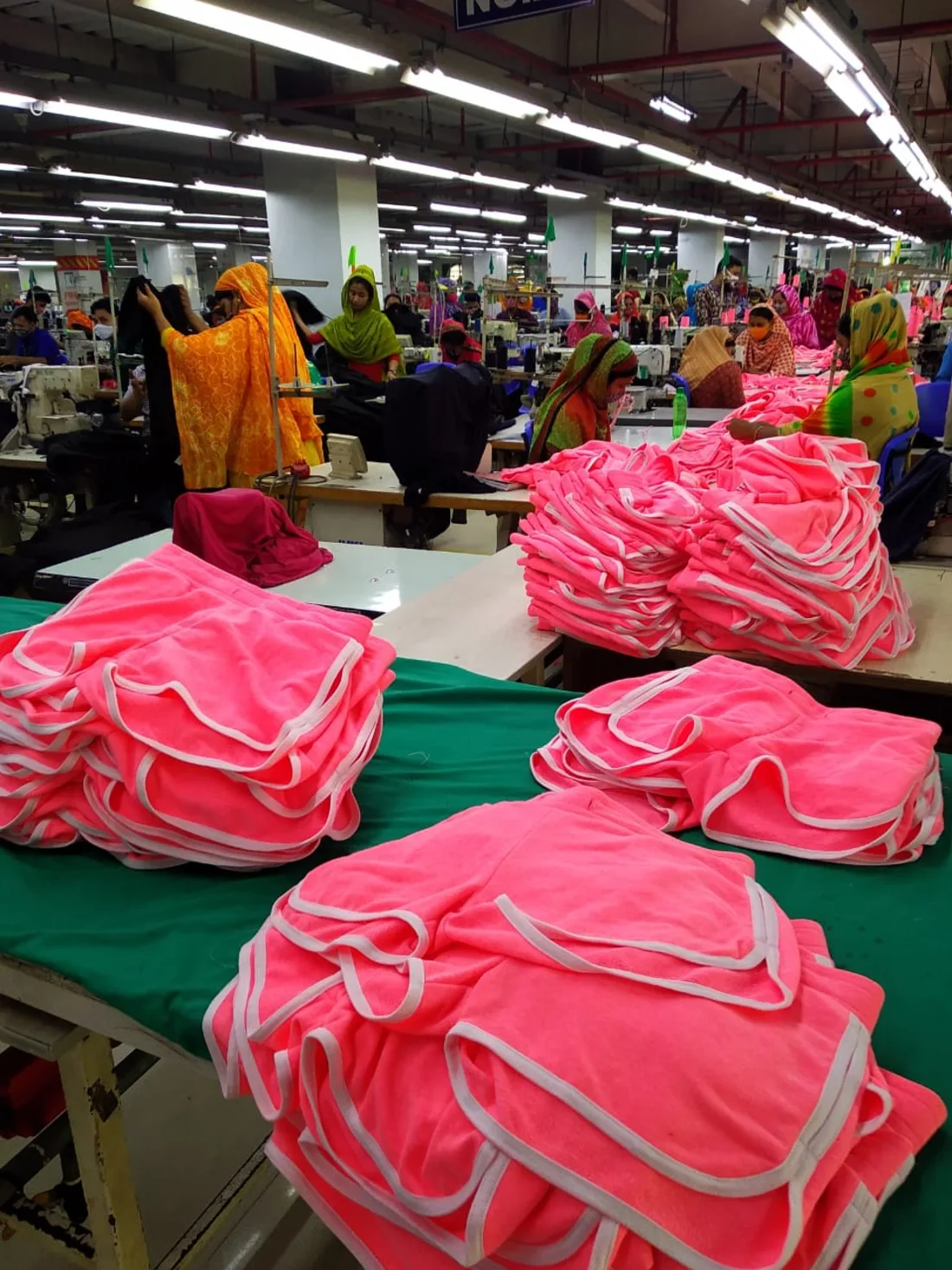
If a factory buys organic cotton but pays their workers off the books in an unregulated facility, they are not an eco-friendly clothing manufacturer. They are just a sweatshop using expensive fabric.
Factory Insight: We constantly see startups requesting organic cotton for their tech packs, only to complain about the price quote. Organic cotton yields are lower than conventional cotton. Weeds must be managed manually instead of with chemical herbicides. The harvesting process is often slower. You cannot demand ethical farming practices and expect fast-fashion pricing.
Greenwashing happens when a factory promotes one ethical aspect (like organic yarn) while hiding destructive practices (like toxic dyeing or unfair labor). A true sustainable partner provides transparency across the entire production lifecycle, from seed to final stitch.
Decoding Organic Fabrics: Beyond Basic Cotton
Your fabric selection dictates the physical quality of your garment and its environmental impact. If you rely on cheap materials, your clothes will degrade quickly, ending up in a landfill and defeating the purpose of sustainable fashion.
GOTS Certified Organic Cotton
Conventional cotton is one of the dirtiest crops on the planet, heavily reliant on synthetic pesticides and massive water consumption. Organic cotton eliminates the toxic chemicals. However, you cannot just take a factory's word for it. You must demand a GOTS (Global Organic Textile Standard) transaction certificate.
- The Feel: Organic cotton often feels slightly different before its first wash. Conventional cotton is heavily treated with chemical softeners on the factory floor. Organic cotton avoids these harsh chemical washes, meaning it relies entirely on the quality of the fiber spinning (like combed or ring-spun methods) for its softness.
- The Weight: You can source organic cotton in any standard weight. A 160 GSM jersey works beautifully for summer tees, while a 350 GSM organic French Terry is perfect for premium hoodies.
Hemp: The Heavyweight Contender
If you run a streetwear brand or require high-durability workwear, look closely at hemp. Hemp grows aggressively fast, requires a fraction of the water that cotton needs, and naturally replenishes the soil.
Manufacturing Reality: Hemp fibers are exceptionally strong. When we cut and sew hemp, it behaves differently under the needle than cotton. It holds its shape better and resists stretching out. A 250 GSM hemp-blend t-shirt will easily outlast a standard cotton tee by years.
Lyocell (Tencel) and Closed-Loop Production
Many brands ask for bamboo viscose, thinking it is the ultimate eco-fabric. The truth? Turning hard bamboo wood into soft fabric requires incredibly harsh chemicals (carbon disulfide), which many factories dump directly into local rivers.
Instead, ask your organic fabric supplier for Lyocell (often branded as Tencel). Lyocell uses wood pulp from sustainably managed eucalyptus forests. More importantly, it utilizes a closed-loop manufacturing process. This means 99% of the water and non-toxic solvents used to break down the wood pulp are recovered, recycled, and reused in the next batch.
| Fabric Type | Durability | Water Usage (Growth) | Best Application | Factory Cost Profile |
|---|---|---|---|---|
| Organic Cotton | High | Medium | Premium t-shirts, hoodies, basics | Medium–High |
| Hemp | Very High | Low | Streetwear, heavy outerwear, denim | High |
| Lyocell (Tencel) | Medium | Very Low | Flowy dresses, activewear, underwear | High |
| Conventional Cotton | Medium | Very High | Fast fashion, promotional merch | Low |
Recycled Synthetics: rPET and the Microplastic Challenge
Organic fabrics cover your knitwear and basics. If you are producing activewear, swimsuits, or outerwear, you need synthetics. The sustainable solution here is Recycled Polyester, commonly referred to as rPET.
The Lifecycle of rPET
We do not pull raw petroleum out of the ground to make rPET. We buy post-consumer plastic water bottles.
- The bottles are sterilized and crushed into tiny plastic flakes.
- The flakes are melted down into liquid polymer.
- The polymer is extruded through microscopic holes to create continuous yarn.
- That yarn is knitted into fabric.
Sewing Recycled Threads
From a factory perspective, working with recycled polyester requires mechanical adjustments. Recycled yarns can sometimes be slightly more brittle than virgin polyester. Our mechanics have to dial in the exact thread tension on the sewing machines to prevent the needles from snapping the thread during high-speed coverstitching.
Expert Advice: If you design activewear using rPET, you must acknowledge the microplastic issue. Every time a customer washes a synthetic garment, microscopic plastic fibers shed into the water system. To counteract this, forward-thinking brands are now selling their garments alongside specialized washing bags (like the Guppyfriend) that capture these fibers in the laundry machine.
The Dark Secret of Apparel: Dye Houses and Wastewater
You can source the most pristine organic cotton on earth, but if you send it to a cheap dye house, you ruin the entire garment. Dyeing is the dirtiest phase of apparel production.
Effluent Treatment Plants (ETP)
If you want to hire a legitimate eco-friendly clothing manufacturer, you must ask them one specific question: "Can you show me the documentation for your Effluent Treatment Plant?"
Factories use millions of gallons of water to dye fabric. Unregulated factories take that wastewater — full of heavy metals, salts, and unbonded dye — and dump it directly into local waterways. A certified ethical factory operates an ETP. This massive filtration system pulls the wastewater from the dye vats, treats it with biological agents to neutralize the chemicals, filters out the sludge, and releases clean water back into the environment.
Low-Impact Reactive Dyes
For organic cotton, we utilize low-impact reactive dyes.
- Unlike cheap pigment dyes that simply sit on top of the fabric, reactive dyes form a permanent chemical bond with the cotton fibers.
- Low-impact dyes strictly exclude toxic chemicals, heavy metals, and mordants.
- They require significantly less water and lower heat during the wash-off process, which drastically reduces the factory's carbon footprint.
Waterless Dyeing Technology
For synthetic fabrics like recycled polyester, the industry is moving toward waterless dyeing (often called dope dyeing or solution dyeing). Instead of dipping finished yarn into a liquid dye bath, the color pigment is added directly to the melted plastic before it is extruded into yarn. The yarn is literally born the correct color, saving millions of gallons of water.
The dye process determines a garment's true environmental impact. Always require an ETP in your factory's facility and specify low-impact or waterless dyeing techniques in your tech pack's bill of materials.
Supply Chain Verification: Certifications That Matter
You cannot market a brand as sustainable based on a verbal promise. Corporate apparel buyers and educated retail consumers look for specific, globally recognized certifications. If a factory claims to be an eco-friendly private label provider, ask to see these specific documents. Check the expiration dates.
GOTS (Global Organic Textile Standard)
This is the gold standard for organic fabrics. GOTS does not just look at the farm. It tracks the cotton through the ginning mill, the spinning facility, the dye house, and the final cut and sew factory. It guarantees no toxic chemicals were used and ensures strict labor standards were met at every facility.
OEKO-TEX Standard 100
This certification tests the final physical garment. It guarantees that every single component — the fabric, the sewing thread, the woven neck label, and the metal zipper — has been rigorously tested and is completely free from harmful levels of toxic substances. It is a safety guarantee for human skin.
WRAP (Worldwide Responsible Accredited Production)
Sustainability involves human beings. WRAP audits the actual sewing floor. It ensures the factory does not use child labor, provides safe ventilation, maintains fire exits, caps mandatory overtime, and pays legally mandated living wages.
REACH Compliance
If you are an importer selling into the European Union, your garments must be REACH compliant. This regulation protects human health and the environment from the risks posed by specific hazardous chemicals used in industrial manufacturing.
Buying Tip: Never let a supplier just paste a GOTS logo on an invoice. Ask for their unique GOTS licensing number, and look it up on the official public database to verify they are currently active.
Navigating MOQs for Sustainable Production
Finding a low MOQ eco clothing partner is difficult. Factories operate on volume, and organic supply chains have strict minimums.
The Dye Lot Constraint
If you want a custom Pantone color for your brand, the factory must dye a fresh batch of organic fabric. Textile mills use massive industrial vats. You cannot dye five yards of fabric in a machine built for five hundred yards. Typically, a custom dye lot requires a minimum of 100 to 150 kilograms of fabric — roughly 300 to 500 t-shirts.
Strategies to Lower Your MOQ
If you do not have the capital for 500 pieces per style, you must engineer your tech pack to fit factory realities.
- Consolidate Your Fabric: Do not design a t-shirt in 160 GSM cotton, a long-sleeve in 200 GSM cotton, and a hoodie in 400 GSM fleece. Design a collection that utilizes the exact same 220 GSM organic cotton across three different styles. You hit the factory's fabric minimum, but get three distinct products.
- Use Stock Organic Colors: Skip the custom dye process. Ask the factory what colors of organic fabric they already hold on the floor (usually black, white, navy, and heather gray). By utilizing stock fabric, a factory can often drop your minimums to 50 or 100 pieces per style.
Quality Control and AQL 2.5 for Organic Garments
Eco-friendly manufacturing does not excuse poor craftsmanship. Your customers will not accept a crooked collar just because the shirt is made from recycled plastic.
The Shrinkage Reality
Conventional factories use aggressive chemical resins to prevent cotton from shrinking. Organic standards prohibit those chemicals. Therefore, an ethical factory must rely on mechanical compacting. We run the organic cotton through massive heated rollers to pre-shrink the fabric before we cut the patterns. Even with compacting, expect a 3% to 5% shrinkage rate on organic knits after the first wash. You must factor this tolerance into your grading matrix.
Implementing AQL Inspections
Before you authorize the final payment for your bulk clothing production run, demand a third-party AQL 2.5 inspection.
- An inspector will randomly select a percentage of your packed boxes.
- They measure the garments against your tech pack specifications.
- They check for dye lot consistency (ensuring shirt #10 looks exactly like shirt #400).
- If major defects exceed 2.5% of the pulled sample, the factory must unpack, sort, and rework the defective units at their own cost.
Biodegradable Packaging and Shipping Logistics
You ruin the narrative of a sustainable garment the moment you ship it in a single-use, non-recyclable plastic polybag.
Polylactic Acid (PLA) and Cornstarch Bags
Update your Bill of Materials to require compostable packaging. The industry standard has shifted to PLA bags, which are derived from fermented plant starch (usually corn).
The Reality Check: Do not label these bags "biodegradable" without context. They require specific industrial composting facilities to break down rapidly. Educate your customers on how to dispose of them properly, or use recycled paper glassine bags instead.
Shipping Consolidation
Ocean freight is the most carbon-efficient method of moving bulk inventory across the globe. Air freight produces roughly 40 times the carbon emissions of a cargo ship. If you are serious about your carbon footprint, you must finish your product development early. Build a 12-week buffer into your launch schedule so you can transport your bulk production via sea freight rather than panic-shipping via air courier at the last minute.
The Elron Standard
Building a fully compliant, certified, and transparent supply chain is a massive logistical burden. Factory owners know that brand founders struggle to balance technical fabric sourcing with marketing and sales.
You need a partner whose infrastructure is already built for the future of ethical retail.
Elron Garments is a 100% export-oriented apparel manufacturer in Dhaka, Bangladesh, offering true OEM, ODM, and sustainable private label production. We built our supply chain specifically to solve the headaches detailed in this guide.
We source premium certified organic fabrics and recycled synthetics, processing them through verified, low-impact dye facilities. We provide low MOQ on-ramps from 50 pieces to help emerging sustainable fashion brands scale without crushing their cash flow, while offering massive bulk production capacity for corporate buyers. Every garment undergoes strict AQL quality control, packaged exactly to your eco-friendly specifications, and delivered DDP through our worldwide shipping network.
Stop selling marketing claims, and start selling actual sustainability.
Ready to produce your line?
Low 50-piece MOQ, samples in 7–15 days, DDP to 38+ countries. Send your specs — we reply within 24 hours.
Get a QuoteFrequently Asked Questions
How do I find a legitimate eco-friendly clothing manufacturer?
Demand transparency beyond marketing claims. Require the factory to provide active certification documents such as GOTS for organic fabrics, OEKO-TEX Standard 100 for chemical safety, and WRAP or BSCI for ethical labor standards. Furthermore, verify they utilize low-impact dyes and operate an Effluent Treatment Plant (ETP) to process their wastewater safely.
What makes a clothing manufacturer eco-friendly?
An eco-friendly manufacturer actively reduces environmental harm across three areas: sourcing sustainable raw materials (organic cotton, recycled polyester), utilizing non-toxic chemical processes (low-impact dyes, water treatment), and maintaining ethical labor standards with safe working conditions and fair wages.
Why is organic cotton more expensive to manufacture?
Organic cotton yields are smaller because farmers cannot use synthetic fertilizers to artificially boost crop sizes. Weed control is done manually rather than with chemical herbicides, and the ginning and spinning processes require specialized facilities to prevent contamination with conventional cotton.
Can I get low MOQs with sustainable clothing production?
Yes, but you must be strategic. To secure low MOQs with an ethical garment factory, request to use stock organic fabric colors (like black or white) that the factory already owns. Requesting custom-dyed organic fabric typically requires a minimum order of 300 to 500 pieces to justify the dye vat setup.
What is the difference between organic cotton and conventional cotton?
Conventional cotton uses vast amounts of toxic pesticides and synthetic fertilizers that degrade soil and pollute water. Organic cotton is grown using natural seeds (non-GMO) and relies on crop rotation and natural pest control, resulting in a safer environment for farmers and a chemical-free final garment.
How do I verify a factory's GOTS certification?
Never accept a screenshot of a logo. Ask the factory for their official GOTS licensing number or transaction certificate. Go to the official Global Organic Textile Standard public database website, enter the license number, and verify that the certification is currently active and matches the factory's exact name.
Are recycled polyester clothes actually sustainable?
Recycled polyester (rPET) is a massive improvement over virgin polyester because it removes plastic waste from the environment and uses far less energy to produce. However, it still sheds microplastics during machine washing. Brands should educate consumers on utilizing microplastic-catching wash bags.
What are low-impact reactive dyes?
Low-impact reactive dyes are chemical dyes formulated without toxic heavy metals or mordants. They have a high absorption rate, meaning the color bonds deeply with the cotton fibers. This results in less dye runoff in the factory wastewater and highly colorfast garments that do not bleed in the laundry.
Do eco-friendly clothes shrink more?
They can if the factory skips steps. Conventional clothing uses harsh chemical resins to prevent shrinkage. Ethical factories use mechanical compacting — running the fabric through heated steam rollers — to pre-shrink the material naturally. Always expect a 3% to 5% shrinkage rate on organic cotton.
What kind of packaging should a sustainable fashion brand use?
Avoid traditional virgin plastic polybags. Update your tech pack to require PLA (Polylactic Acid) bags derived from plant starches, or use recycled glassine paper bags. Ensure your shipping cartons are made from post-consumer recycled cardboard and utilize paper packing tape instead of plastic tape.
Is bamboo fabric actually eco-friendly?
The bamboo plant itself is highly sustainable as it grows rapidly without pesticides. However, turning hard bamboo into soft fabric often requires a highly toxic chemical process utilizing carbon disulfide. If you want sustainable wood-pulp fabric, specify Lyocell (Tencel), which utilizes a strict closed-loop, non-toxic manufacturing process.
How much does it cost to manufacture sustainable clothing?
Producing sustainable clothing typically costs 20% to 40% more per unit than conventional fast fashion. A premium GOTS certified organic cotton t-shirt with low-impact dye might cost $10 to $15 to manufacture, compared to $5 to $8 for a basic conventional cotton shirt.
Is sustainable fashion profitable?
Yes. While the manufacturing costs are higher, consumers are willing to pay a premium for verified ethical garments. Brands that tell a transparent supply chain story routinely achieve retail profit margins of 60% to 75% on sustainable apparel.
What is closed-loop manufacturing in fashion?
Closed-loop manufacturing is a production system designed so that the chemicals, solvents, and water used to create a fabric (like Lyocell) are captured, filtered, and continuously reused in the factory, resulting in near-zero chemical waste entering the environment.
Can small clothing brands be sustainable?
Absolutely. Small brands are often more agile than massive corporations. By utilizing stock organic blanks, adopting a pre-order model to eliminate dead stock inventory, and using compostable packaging, a startup can operate a highly sustainable business from day one.
Do sustainable clothing brands need tech packs?
Yes. A tech pack is your garment's architectural blueprint. For a sustainable brand, the tech pack is vital because it explicitly instructs the factory to use organic yarn, specifies the use of recycled threads, and dictates the exact biodegradable packaging requirements.
What is OEKO-TEX Standard 100?
It is a globally recognized independent safety certification. If a garment carries this tag, it means every single element — the fabric, the thread, the buttons, and the zippers — has been tested in a lab and proven free from harmful levels of toxic chemicals.
Why is it hard to find a sustainable clothing manufacturer?
It is difficult because the apparel industry operates on tight margins, and sustainable practices require massive factory investments — like building water treatment plants and paying higher living wages. Finding a factory that has made these investments and is willing to accept low startup MOQs takes extensive vetting.
What does CMT mean in ethical manufacturing?
CMT stands for Cut, Make, Trim. In this model, the brand owner sources the organic fabric and eco-friendly hardware themselves and ships it to the factory. The ethical factory simply provides the fair-wage labor to cut the fabric and sew the garments together.
How do I market my sustainable clothing brand?
Focus on radical transparency. Do not just use buzzwords like "green." Show your audience behind the scenes. Post videos of your factory's GOTS certification, explain the difference in your fabric GSM, and educate them on why you chose waterless dyes over conventional methods.