
Clothing Manufacturer vs Wholesaler: What Brands Need to Know to Survive
You built a machine that generates revenue but a supply chain that captures no profit. Here is the exact math, quality, and scaling breakdown behind the manufacturer vs wholesaler decision — and when to make the switch.
Elron Garments Team · · 16 min read

You are tracking your brand's monthly revenue, and the numbers look incredible on paper. You sold out of your new heavyweight streetwear hoodie release in two days. The marketing worked. The design resonated.
Then you look at the actual profit. After paying for the blank garments, the screen printing fees, the relabeling, the polybags, and the shipping, your margin is practically nonexistent.
You built a machine that generates revenue, but you failed to build a supply chain that captures profit.
Every fashion brand eventually hits this exact wall. You realize that buying pre-made blanks from a catalog limits your financial growth and stifles your creative control. Suddenly, the industry terminology becomes a barrier. You start emailing suppliers, but you do not even know what kind of company you are talking to. Are they making the clothes, or are they just flipping them?
The clothing manufacturer vs wholesaler debate is the most critical supply chain decision you will make. Pick the wrong model for your current growth stage, and you will either burn all your capital on minimum order quantities you cannot sell, or bleed out your profit margins paying markups to a middleman.
We have spent over a decade on factory floors and inside massive distribution warehouses. We have watched startup clothing brands scale to seven figures by timing their supply chain transitions perfectly, and we have watched well-funded companies go bankrupt because they misunderstood factory economics. This guide destroys the marketing illusions. We are going to look strictly at the math, the operational realities, and the exact moments when a brand must abandon the wholesale catalog and move to custom factory production.
Defining the Supply Chain: Who Actually Does What?
The apparel industry thrives on intentional confusion. Companies will build slick websites claiming to be "premium custom manufacturers," when in reality, they do not own a single sewing machine. You must understand exactly who you are sending your money to.
What is a Clothing Manufacturer?
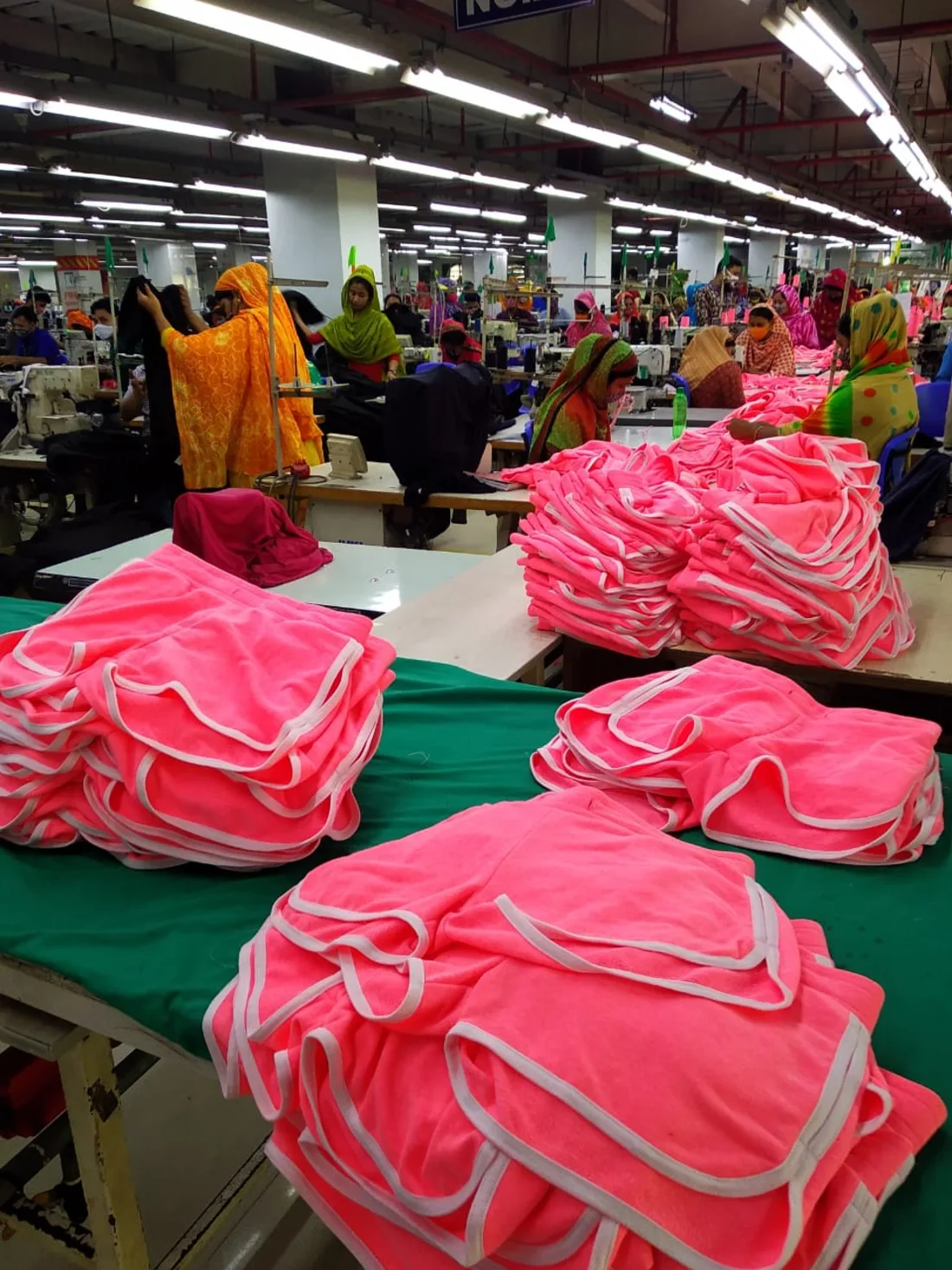
A clothing manufacturer is the origin point. This is the actual factory. They buy raw yarn, knit it into fabric rolls, dye those rolls, cut the fabric based on a custom pattern, sew the pieces together, and box up the final garment. When you work directly with a manufacturer, you dictate every variable. This process is commonly referred to as Full-Package Production (FPP) or Cut and Sew manufacturing.
- Their Business Model: They make money on industrial volume. They charge a setup fee (labor time) and a per-unit cost based on the exact amount of fabric and thread used.
- Their Constraint: They require Minimum Order Quantities (MOQ). They cannot halt a production line that employs fifty people just to sew twenty t-shirts for a new brand.
What is a Clothing Wholesaler?
A clothing wholesaler is a distributor. They own massive warehouses, not sewing floors. They purchase tens of thousands of blank garments from overseas manufacturers at rock-bottom prices, import them, and store them on shelves in domestic warehouses.
When you buy from a wholesaler, you are selecting a pre-made product from a catalog. You might pick a black, 100% cotton, 180 GSM t-shirt. You order 50 of them, they ship to you in three days, and then you take them to a local screen printer to add your logo.
- Their Business Model: They assume the inventory risk. They tie up millions of dollars in container ships and warehouse leases. They make money by marking up the per-unit price. They buy that black t-shirt for $2.00 from a factory and sell it to you for $5.50.
- Their Constraint: You have zero control over the fit, the fabric, or the dye color. You get exactly what they have in stock on that specific day.
The Financial Breakdown: Margins, Markups, and Cash Flow
Let us look at the raw numbers. The core difference in the clothing manufacturer vs wholesaler decision comes down to where you want to park your cash.
The Cost of the Wholesale Model
When you buy from wholesale clothing distributors, your upfront cash requirement is very low. You only buy what you need for a specific drop. If you want to print 30 hoodies, you buy 30 blank hoodies. However, your per-unit cost is incredibly high.
- Blank Hoodie Cost: $18.00
- Inbound Shipping to Printer: $1.00
- Local Screen Print (2 Colors): $4.50
- Neck Relabeling (Tear away & Sew): $1.50
- Custom Polybagging: $0.50
- Total Cost of Goods Sold (COGS): $25.50
If you retail that hoodie for $60.00, your gross profit is $34.50. That looks fine until you deduct your ad spend, platform fees, and outbound shipping. Suddenly, your net margin is in the single digits.
The Cost of the Manufacturing Model
When you shift to direct factory production, your per-unit cost plummets, but your upfront capital requirement spikes. You are bypassing the distributor's markup, but you are assuming the inventory risk. Let us price out that exact same heavy hoodie via direct cut and sew manufacturing, assuming a moderate MOQ of 300 units.
- FOB Factory Price (includes printing, custom labels, and bagging): $12.50
- Ocean Freight & Import Duties (per unit): $2.00
- Total Landed Cost: $14.50
By working directly with the factory, you shaved $11.00 off your exact cost per unit. On a 300-piece run, that is $3,300 in pure added profit that goes straight to your bank account instead of the wholesaler.
Expert Advice: Startups often miscalculate landed cost. A factory quote (FOB) is just the price at the loading dock. You must factor in air or ocean freight, insurance, and import tariffs to compare it accurately against a domestic wholesale catalog price.
Customization Limits: How Much Control Do You Need?
A brand usually outgrows wholesale distributors the moment they want to build a specific silhouette.
The Wholesale Constraint: Living in the Catalog
Wholesale blanks are engineered to fit the widest possible demographic. They are cut to be aggressively average. A standard wholesale t-shirt fits a 20-year-old skateboarder and a 50-year-old corporate accountant adequately, but fits neither of them perfectly.
- Fabric Limitations: You are stuck with their GSM (Grams per Square Meter). If they only offer a 150 GSM shirt and you want a 220 GSM heavyweight drape, you are out of luck.
- Color Limitations: You are restricted to their stock colors. If your brand identity requires a highly specific washed-out mauve, you will not find it in a standard distributor catalog.
- Construction Flaws: Wholesalers prioritize speed and cost over longevity. They use standard overlock stitching. They often use carded cotton instead of premium combed cotton, which means the shirt will likely pill and degrade after ten washes.
The Manufacturing Advantage: The Tech Pack Reality
Working with a factory requires a Tech Pack (Technical Packet). This is an architectural blueprint for your clothing. When you transition to custom apparel manufacturing, you dictate every single physical property of the garment.
- Exact Grading: You dictate the exact measurements. Want the sleeves an inch longer? Put it in the tech pack. Want a severe drop-shoulder seam? Dictate the point of measure.
- Custom Dye Lots: Factories utilize reactive dye processes matched to exact Pantone numbers. Your fabric is dyed specifically for your brand.
- Hardware and Trims: You choose the specific YKK metal zippers, the exact thickness of the drawstrings, and the metal aglets.
- Premium Construction: You instruct the factory to use double-needle coverstitching on the hems to prevent fraying, and require fabric compacting (pre-shrinking) so the garment survives heavy wash cycles.
Speed to Market: Analyzing Lead Times
If capital is your first constraint, time is your second.
When Speed Wins: The Wholesale Model
The single greatest advantage of a wholesale clothing distributor is immediate inventory access. If a celebrity happens to wear your brand on a Tuesday, and your website traffic explodes, you need product immediately. You can log into a wholesale portal, order 500 blanks, have them delivered to your local screen printer by Thursday, printed by Friday, and shipped to customers by Monday. The wholesale supply chain is built for rapid, reactive drops.
Planning Ahead: The Manufacturing Timeline
Custom manufacturing is incredibly slow. You cannot rush physics, and you cannot rush cargo ships across the ocean. A standard direct-to-factory timeline looks like this:
- Tech Pack Submission & Sourcing: 1 to 2 weeks
- Proto Sampling & Fit Revisions: 3 to 4 weeks
- Fabric Dyeing (Bulk Lot): 2 to 3 weeks
- Cut, Sew, Print, and Package: 4 to 5 weeks
- Ocean Freight to USA: 4 to 5 weeks
From the day you sign the contract to the day the boxes land in your warehouse, you are looking at a 14 to 19-week cycle. Brands that manufacture directly must forecast their sales and design their winter collections in the middle of summer.
Quality Control and Brand Consistency
The moment a customer opens your polybag, they make a subconscious judgment about your brand's worth. Consistency is what separates premium labels from amateur merch operations.
The Danger of Wholesale Dye Lots
When you buy from a wholesaler, you are buying from a massive, co-mingled inventory pool. If you order 100 black shirts, 50 of them might have been manufactured in a factory in Honduras in March, and the other 50 might have been manufactured in a factory in Bangladesh in November.
The fabric weights might feel slightly different. The black dye might have a slightly blue undertone on half the shirts and a warm undertone on the other half. Your customers will notice this inconsistency. If they buy a medium shirt in June, and buy the exact same medium shirt in December, they expect it to fit exactly the same. With wholesale blanks, you cannot guarantee that.
Factory QC and AQL Standards
When you execute a custom production run with a dedicated factory, the fabric is milled and dyed in one single continuous batch. Every shirt is identical. More importantly, you control the quality inspection. In professional apparel manufacturing, we utilize AQL (Acceptable Quality Limit) standards. Premium brands enforce an AQL 2.5 standard.
- Before you pay your final invoice, a third-party inspector visits the factory.
- They pull a random statistical sample of your sealed boxes.
- They measure the garments against the tolerances in your tech pack.
- If they find a defect rate higher than 2.5% (crooked seams, loose threads, sizing errors), the entire order is rejected, and the factory must fix it at their own expense.
When you buy wholesale, you get what is in the box. If the side seam twists after one wash, the wholesaler does not care. They sold you a blank commodity.
Scalability: The Transition from Blanks to Cut & Sew
You do not have to pick one model forever. The smartest fashion brands use a hybrid growth strategy.
Phase 1: The Proof of Concept (Wholesaler)
When you are launching your brand, you have no data. You do not know if your audience prefers zip-up hoodies or pullovers. You do not know if your graphic designs will actually sell.
The Strategy: Use wholesale blanks. Buy small batches (30 to 50 pieces). Test your marketing, validate your designs, and build an audience. You will sacrifice margin, but you protect your cash.
Phase 2: Private Label / ODM (Hybrid)
Once you have consistent sales, you need better margins but might not be ready for a 500-piece custom cut-and-sew run.
The Strategy: Work with a factory that offers ODM (Original Design Manufacturing). The factory already produces high-quality, pre-fitted blank garments, but they keep them unbranded on their floor. You commit to a low MOQ (e.g., 100 pieces). The factory applies your custom neck tags, screen prints your designs, and bags them for you. It bridges the gap between wholesale speed and factory direct pricing.
Phase 3: True Brand Independence (Manufacturer)
You are generating predictable revenue. You have a distinct aesthetic and your customers are demanding specialized fits.
The Strategy: Shift to OEM (Original Equipment Manufacturing). Hire a technical designer, build out robust tech packs, and execute large bulk orders (300+ pieces per style) with a dedicated factory. Your margins expand massively, allowing you to invest in heavy customer acquisition and wholesale retail distribution.
Inventory Management and Dead Stock Risks
Dead stock is the silent killer of apparel businesses. Dead stock refers to inventory you paid to manufacture, but cannot sell. It sits in your warehouse, tying up your operating capital.
Wholesaler Flexibility
Because you can buy exactly what you need, you rarely sit on dead stock. If a specific graphic tee isn't selling, you simply stop ordering the blank shirts for it. Your capital remains liquid. You pivot your designs without taking a financial loss.
The Manufacturer Risk
When you order 500 custom-dyed windbreakers from a factory, you own them. If your marketing campaign fails, or if the trend dies while the product is on a cargo ship, you are stuck with 500 windbreakers.
Factory Insight: To mitigate inventory risk while using a factory, consolidate your fabric sourcing. Do not order three different items using three different fabrics. Order a hoodie, a sweatpant, and a heavy t-shirt that all utilize the exact same 300 GSM French Terry fabric in the exact same color. You hit the factory's raw material MOQ easily, but spread your risk across three distinct silhouettes.
Compliance, Ethics, and Factory Certifications
Consumers in 2026 demand supply chain transparency. They want to know who made their clothes and what chemicals were used in the process.
When you buy cheap wholesale blanks, tracing the supply chain is nearly impossible. The distributor buys from dozens of offshore factories simultaneously. You cannot legally claim your garments are sustainably made or ethically sourced because you have no visibility into the actual sewing floor.
When you contract directly with a clothing manufacturer, you request their audit certifications upfront.
- WRAP (Worldwide Responsible Accredited Production): Verifies the factory obeys local labor laws, pays fair wages, and ensures a safe working environment.
- OEKO-TEX Standard 100: Ensures the raw textiles, dyes, and hardware are tested and completely free from harmful substances and toxic chemicals.
- GOTS (Global Organic Textile Standard): Required if you intend to market your garments as using certified 100% organic cotton.
If your brand identity relies on sustainability or ethical labor, the wholesale model is a massive liability. You must use direct manufacturing to verify compliance.
Clothing Manufacturer vs Wholesaler: The Ultimate Comparison
| Feature | Direct Clothing Manufacturer | Wholesale Distributor |
|---|---|---|
| Primary Advantage | Absolute design control & high profit margins | Immediate inventory access & low upfront cost |
| Per-Unit Cost | Very low (highest margin potential) | High (distributor markup applied) |
| Upfront Capital | High (must meet factory MOQ and pay tooling) | Very low (buy exactly what you need) |
| Lead Time | 8 to 16 weeks (production + ocean freight) | 2 to 5 days (domestic ground shipping) |
| Design Control | 100% custom (tech packs, custom dye, grading) | Zero (select from existing stock catalog) |
| MOQ Limits | Varies (50 pieces at Elron; 300–500+ at most factories) | None (often buy single units) |
| Quality Consistency | Extremely high (single dye lot, AQL 2.5 inspected) | Variable (mixed dye lots, mixed origin countries) |
| Best Suited For | Established brands, specialized fits, scaling retail | Startups, merch lines, reactive trend brands |
How to Choose Based on Your Business Model
Choose a Wholesale Distributor If:
- You are running a YouTube/podcast merchandise line where the graphic matters more than the garment fit.
- You are a Print-on-Demand (POD) dropshipper testing viral designs.
- You are a corporate buyer needing 50 quick polo shirts for a company retreat next week.
- You have less than $2,000 in startup capital and cannot afford to hold inventory.
Choose a Direct Clothing Manufacturer If:
- You are building a high-end streetwear label that requires specific drop-shoulder grading and raw hems.
- You are designing specialized activewear requiring proprietary moisture-wicking fabric blends.
- You are selling wholesale to boutique retail stores and need the gross margin to support a 50% wholesale discount.
- You are tired of your customers complaining about shrinking shirts and inconsistent sizing.
The Elron Standard
Transitioning from buying wholesale blanks to managing a global manufacturing supply chain is intimidating. Navigating tech packs, fabric yields, import duties, and quality control tolerances requires operational expertise that most creative founders simply do not have time to learn.
You need a partner who bridges the gap.
Elron Garments is a 100% export-oriented apparel manufacturer in Dhaka, Bangladesh, offering a complete spectrum of production solutions. We eliminate the guesswork from the supply chain. Whether you need an ODM private label program to escape the constraints of wholesale catalogs, or you require heavy OEM custom manufacturing for a complex tech pack, we execute with precision.
We provide transparent cost structures, strict AQL quality control on our production lines, and MOQs from just 50 pieces — designed to help growing brands scale without tying up dangerous amounts of capital. With DDP shipping to 35+ countries, we handle the logistics from the cutting table directly to your warehouse door.
Stop settling for what is in stock, and start building what your customers actually want.
Ready to produce your line?
Low 50-piece MOQ, samples in 7–15 days, DDP to 38+ countries. Send your specs — we reply within 24 hours.
Get a QuoteFrequently Asked Questions
What is the difference between a clothing manufacturer and a wholesaler?
A clothing manufacturer operates the factory floor, knitting fabric and sewing custom garments from scratch based on a brand's technical blueprints, requiring minimum order quantities. A clothing wholesaler is a distributor that purchases pre-made blank garments in massive bulk from factories, storing them in domestic warehouses to resell in small quantities to brands at a marked-up price.
Is it cheaper to buy wholesale or manufacture clothes directly?
It is significantly cheaper per unit to manufacture clothes directly with a factory because you eliminate the distributor's markup. However, manufacturing requires a much larger upfront cash investment due to Minimum Order Quantities (MOQs), whereas wholesale allows you to buy single pieces.
When should a clothing brand switch from wholesale blanks to a manufacturer?
A brand should transition to a direct manufacturer when their sales volume becomes predictable (consistently selling 100+ units per drop), their margins are too tight to scale marketing efforts, or their customers start demanding custom fits and premium fabrics that catalogs cannot provide.
Do wholesalers offer custom clothing tags?
Some large wholesalers offer basic relabeling services (tear-away tags), but they will not sew custom woven labels into the neckband during the actual garment construction. You will have to hire a secondary local contractor to cut out the stock tags and sew in your custom branding.
What is MOQ in clothing manufacturing?
MOQ stands for Minimum Order Quantity. It is the lowest number of garments a factory is willing to produce in a single production run. MOQs exist because factories must purchase raw fabric in bulk dye lots and spend hours calibrating sewing lines for a specific design.
Can I visit the factory that makes my wholesale clothing?
Generally, no. Wholesalers source from dozens of different mega-factories across the globe to secure the lowest possible commodity pricing. You are buying from the distributor's warehouse, not dealing directly with the origin factory floor.
How long does it take to get clothes from a manufacturer?
Custom apparel production typically takes 8 to 16 weeks. This timeline includes tech pack review, proto-sampling, bulk fabric dyeing, cutting, sewing, quality inspection, and ocean freight transit from the factory to your domestic warehouse.
What does cut and sew manufacturing mean?
Cut and sew refers to the entire garment creation process. A factory takes raw rolls of fabric, cuts them into specific anatomical panels using a custom grading pattern, and sews them together. It is the opposite of printing on a pre-made blank t-shirt.
Are wholesale clothes lower quality than manufactured clothes?
Not always, but generally yes. Wholesale blanks are engineered for mass market commodity pricing, often using standard carded cotton and cheap overlock stitching. Custom manufacturing allows you to dictate premium construction, like combed cotton, heavy GSM weights, and double-needle coverstitching.
What is a tech pack and why do I need one?
A tech pack is the master blueprint for your garment. It contains technical flat sketches, a bill of materials (fabric, zippers, labels), and a precise measurement matrix. You need it because a factory cannot build a custom garment accurately without exact mathematical instructions.
Can I get samples from a wholesaler?
Yes, and it is incredibly easy. Because wholesalers hold domestic stock, you can simply purchase one unit of a blank t-shirt and it will arrive at your door in a few days. Getting a sample from a direct manufacturer requires them to build the item from scratch, which takes weeks.
How do I find a good clothing manufacturer?
To find a reliable manufacturer, utilize vetted industry directories, attend major textile trade shows like SOURCING at MAGIC, and evaluate factories by requesting their compliance certifications (WRAP, OEKO-TEX) and asking detailed questions about their AQL quality control standards.
What is private label clothing?
Private label clothing involves a factory producing pre-designed, high-quality unbranded garments (blanks) and allowing a brand to place their own custom tags, logos, and packaging on the items before selling them. It offers better margins than wholesale with lower MOQs than full custom manufacturing.
How much profit should you make on clothing?
A healthy fashion brand targets a gross profit margin of 50% to 75%. To achieve this, your final retail price should be roughly 2.5 to 3 times your total landed cost (the factory price plus all shipping, duties, and packaging costs).
What is the best blank t-shirt for a streetwear brand?
Streetwear demands heavyweight structure. If you are using the wholesale model, brands typically look for blanks ranging from 200 GSM to 250 GSM, featuring a high ribbed collar, a boxy drop-shoulder fit, and 100% combed cotton construction.
What does FOB mean in apparel pricing?
FOB stands for "Free on Board." It is a factory price quote that includes the cost of raw materials, labor, and transporting the finished goods to the local shipping port in the country of origin. It does not include the ocean freight or import duties required to get the goods to your country.
Do clothing factories steal designs?
Unprofessional factories might copy a design if it goes viral. To protect your brand, require the manufacturer to sign an NNN (Non-Disclosure, Non-Use, Non-Circumvention) agreement before sending them your tech packs, and always register your brand trademarks.
What is CMT production?
CMT stands for Cut, Make, Trim. In this manufacturing arrangement, the brand owner is responsible for purchasing the fabric, zippers, and labels separately and shipping them to the factory. The factory charges strictly for the labor of cutting the fabric and sewing the garment.
How do you negotiate with clothing suppliers?
Do not just ask for a lower price. Negotiate by pulling logical levers. Offer to consolidate your fabric orders (using the same material for multiple styles to hit mill minimums), simplify the garment's stitching complexity, or increase your bulk order volume to reduce the per-unit factory setup fee.
What happens if a manufacturer messes up my order?
If you negotiated correctly, your contract should specify that final payment is contingent on passing a third-party AQL 2.5 inspection. If the inspector finds major defects before the goods ship, the factory is legally and financially obligated to rework the garments or apply a heavy discount.